
Endometrial Polyps: Causes, Symptoms and Impact on Fertility
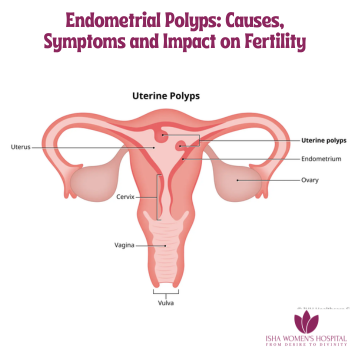
Endometrial polyps are a common yet often overlooked cause of irregular bleeding and fertility issues in women.
Many women may not even realize they have polyps because symptoms can be mild or completely absent. However, even small polyps can interfere with implantation and reduce the chances of pregnancy.
The good news is that diagnosis is simple, and treatment is highly effective.
At Isha Women’s Hospital & IVF Centre, Dombivli, advanced diagnostic techniques and fertility-focused care help detect and treat endometrial polyps early.
Key Takeaways
- Endometrial polyps are benign growths in the uterine lining
- They can cause irregular bleeding and fertility issues
- Many women may have no symptoms
- Polyps can interfere with embryo implantation
- Treatment is simple and improves fertility outcomes
Understanding Endometrial Polyps
What Are Endometrial Polyps?
Endometrial polyps are soft, benign growths that develop in the inner lining of the uterus (endometrium).
They can be:
- Single or multiple
- Small or large in size
These growths are usually non-cancerous, but they still require proper evaluation.
Even small polyps can affect the uterine environment.
Why Do Endometrial Polyps Develop?
Endometrial polyps are mainly linked to hormonal imbalance.
Common causes include:
- Excess estrogen stimulation
- Overgrowth of endometrial tissue
- Hormonal irregularities
They are most commonly seen in women of reproductive age.
Causes & Risk Factors
Common Risk Factors
Certain factors increase the likelihood of developing polyps:
| Risk Factor | Impact |
|---|---|
| Hormonal imbalance | Excess estrogen |
| PCOS | Irregular ovulation |
| Obesity | Increased estrogen levels |
| Age (30–50 years) | Higher risk |
| Tamoxifen use | Uterine stimulation |
Symptoms of Endometrial Polyps
Common Symptoms
Endometrial polyps can cause noticeable menstrual changes such as:
- Irregular periods
- Heavy menstrual bleeding
- Bleeding between periods
- Spotting after intercourse
- Postmenopausal bleeding
When There Are No Symptoms
In many cases, polyps cause no symptoms at all.
They are often discovered during:
- Fertility evaluation
- Routine ultrasound
Silent conditions can still significantly impact fertility.
How Polyps Affect Fertility
Impact on Implantation
Endometrial polyps can interfere with implantation by:
- Occupying space inside the uterus
- Preventing embryo attachment
- Altering the uterine lining
This reduces implantation rates and pregnancy success.
Effect on Natural Conception
Polyps may:
- Disrupt sperm movement
- Affect the uterine environment
- Reduce chances of fertilization
Impact on IVF Success
In IVF treatment:
- Polyps can reduce implantation rates
- Increase chances of IVF failure
Removing polyps before IVF significantly improves outcomes.
Diagnosis of Endometrial Polyps
How Polyps Are Detected
Doctors use the following tests:
| Test | Purpose |
|---|---|
| Ultrasound | Initial screening |
| Saline sonography | Better visualization |
| Hysteroscopy | Gold standard diagnosis |
When to Suspect Polyps
Polyps may be suspected in cases of:
- Abnormal uterine bleeding
- Recurrent IVF failure
- Unexplained infertility
Treatment Options
Do All Polyps Need Treatment?
Not all polyps require immediate removal.
- Small, asymptomatic polyps may be monitored
- Polyps affecting fertility usually need treatment
Hysteroscopic Polypectomy
The most effective treatment is hysteroscopic polypectomy.
- Minimally invasive procedure
- Direct visualization of the uterus
- Quick recovery
It is safe, effective, and improves fertility outcomes.
Chances of Pregnancy After Polyp Removal
Fertility Improvement After Treatment
One of the most reassuring aspects of endometrial polyps is that fertility often improves significantly after removal.
After hysteroscopic polypectomy:
- Uterine lining becomes more receptive
- Implantation rates improve
- Natural conception chances increase
- IVF success rates are higher
Studies show that removing polyps before IVF can significantly improve outcomes. Many women conceive naturally within months after treatment.
The key is proper diagnosis and timely intervention.
When Endometrial Polyps Become a Serious Concern
Red Flags That Should Not Be Ignored
Certain symptoms may indicate the need for immediate evaluation:
- Persistent heavy bleeding
- Bleeding after menopause
- Recurrent IVF failure
- Rapid recurrence of polyps
Although most polyps are benign, these signs require further investigation. Early medical attention helps rule out rare complications and ensures proper treatment.
Understanding the Difference Between Polyps and Other Uterine Conditions
Endometrial polyps are often confused with other uterine conditions.
| Condition | Difference |
|---|---|
| Fibroids | Grow in uterine muscle, not lining |
| Adenomyosis | Thickening of uterine wall |
| Endometrial hyperplasia | Diffuse thickening, not localized growth |
Accurate diagnosis is essential because treatment varies for each condition. Advanced imaging and hysteroscopy help differentiate these conditions effectively.
Frequently Asked Questions (FAQs)
1. What causes endometrial polyps in women?
Ans - Endometrial polyps are mainly caused by hormonal imbalance, especially excess estrogen, which leads to overgrowth of the uterine lining.
2. Can endometrial polyps go away on their own?
Ans - Small polyps may occasionally shrink, but most do not disappear on their own and may require medical monitoring or removal.
3. Do endometrial polyps always cause symptoms?
Ans - No, many women have no symptoms. Polyps are often discovered during fertility testing or routine scans.
4. Can endometrial polyps affect fertility?
Ans - Yes, polyps can interfere with embryo implantation and reduce the chances of pregnancy.
5. Is hysteroscopy safe for removing polyps?
Ans - Yes, hysteroscopy is a safe, minimally invasive procedure with quick recovery and high success rates.
6. How long does it take to recover after polyp removal?
Ans - Most women recover within a few days and can resume normal activities quickly.
7. Can polyps return after treatment?
Ans - Yes, recurrence is possible, especially if hormonal imbalance persists.
8. Should polyps be removed before trying to conceive?
Ans - Yes, especially if they are large or affect the uterine cavity, as removal improves fertility outcomes.
9. Are endometrial polyps cancerous?
Ans - Most polyps are benign, but a small percentage may require evaluation to rule out malignancy.
10. Can IVF work with endometrial polyps?
Ans - IVF can still be performed, but removing polyps beforehand significantly improves implantation and success rates.