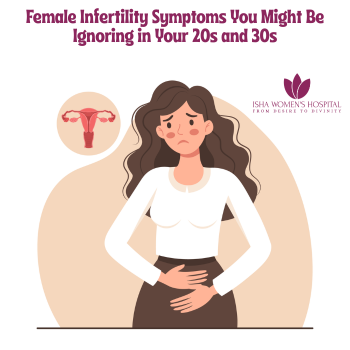
Female Infertility Symptoms You Might Be Ignoring in Your 20s and 30s
If you are in your 20s or 30s, fertility problems may be the last thing on your mind.
But irregular periods, severe period pain, PCOS symptoms, previous pelvic infections, or difficulty conceiving can sometimes be early clues that deserve attention.
The good news is that noticing a possible warning sign does not mean you are infertile or that you will need IVF.
It simply means there may be value in understanding what your body is telling you before a small problem becomes a bigger concern.
Key Takeaways
- Female infertility does not always have obvious symptoms.
- Irregular or absent periods can indicate problems with ovulation.
- Severe period pain may be associated with endometriosis, adenomyosis, or other pelvic conditions.
- PCOS can affect ovulation even when a woman feels otherwise healthy.
- Previous pelvic infections, surgery, or certain medical conditions can affect fertility.
- Fertility naturally declines with age, particularly as women move through their 30s.
- Regular periods do not guarantee that every aspect of fertility is normal.
- Early fertility evaluation does not automatically mean IVF.
- Understanding your reproductive health earlier can give you more choices later.
Can You Have Fertility Problems Without Knowing It?
What Does Female Infertility Actually Mean?
Female infertility means having difficulty becoming pregnant despite regular unprotected intercourse over an appropriate period of time.
It can result from problems with ovulation, ovarian reserve, fallopian tubes, the uterus, endometriosis, age-related changes, or other reproductive factors.
Some women have clear warning signs.
Others have completely regular periods and feel perfectly healthy.
That is why fertility cannot be judged by symptoms alone.
A woman can have regular periods and still have blocked fallopian tubes, endometriosis, reduced ovarian reserve, or another condition affecting conception.
Male factors can also contribute to a couple's difficulty conceiving.
This is why fertility evaluation should focus on both partners when pregnancy is not occurring.
You do not always need to feel infertile to have a fertility concern.
Why Infertility Symptoms Are Easy to Ignore in Your 20s and 30s
Being young can create a false sense of security.
Many women assume that because they are in their 20s or early 30s, pregnancy will automatically happen whenever they are ready.
That is not always the case.
Irregular periods may be dismissed as normal.
Severe menstrual pain may be treated as something every woman simply has to tolerate.
PCOS symptoms may be ignored because they do not interfere with everyday life.
Fertility is often considered only after a couple starts trying for a baby.
By then, an underlying condition may have been present for years.
This does not mean every irregular period or painful period is a sign of infertility.
It means persistent or significant changes deserve proper evaluation.
Your reproductive health deserves attention even when pregnancy is not an immediate goal.
Period Changes You Should Not Ignore
Irregular Periods May Mean Irregular Ovulation
Your menstrual cycle can provide useful information about how regularly you may be ovulating.
| Period Pattern | What It May Indicate |
|---|---|
| Very irregular cycles | Ovulation problems |
| Very long cycles | Infrequent ovulation |
| Frequently missed periods | Hormonal or reproductive issue |
| No periods | Possible ovulatory dysfunction |
| Major changes in cycle pattern | Needs evaluation if persistent |
Ovulation is essential for natural conception.
If an egg is not released regularly, it can become harder to conceive.
PCOS is one common cause of irregular ovulation.
However, thyroid problems, elevated prolactin, significant weight changes, stress, and other hormonal conditions can also affect the menstrual cycle.
A doctor may therefore look beyond the period itself to understand what is causing the change.
An irregular period is not automatically infertility, but it can be an important fertility clue.
Very Heavy Periods Can Be a Warning Sign
Heavy periods are not always related to infertility.
However, unusually heavy menstrual bleeding can sometimes point toward an underlying condition affecting the uterus or hormones.
Watch for:
- Bleeding that is unusually heavy.
- Passing large blood clots.
- Periods lasting longer than usual.
- Bleeding that interferes with work, college, exercise, or normal activities.
- Severe fatigue during or after menstruation.
Possible causes include:
- Uterine fibroids
- Adenomyosis
- Endometrial polyps
- Hormonal disorders
- Other uterine conditions
Heavy bleeding can also lead to iron-deficiency anemia.
If your periods have suddenly become much heavier than they used to be, finding the cause is more useful than simply trying to manage the bleeding every month.
Painful Periods Are Not Always Normal
Mild menstrual cramps are common.
Severe pain that stops you from living your normal life is different.
You should consider a medical evaluation if period pain:
- Makes you miss work or college.
- Requires frequent pain medication.
- Gets worse over time.
- Continues after your period ends.
- Occurs with painful intercourse.
- Happens during bowel movements or urination around menstruation.
One possible cause is endometriosis.
Endometriosis can cause inflammation and scarring in the pelvis and may affect fertility in some women.
Not every woman with endometriosis has severe symptoms.
But severe or worsening pelvic pain should not simply be accepted as something you have to live with.
Pain is information from your body, not something you should automatically normalize.
PCOS Symptoms That May Affect Fertility
Irregular Periods, Acne, and Excess Hair Growth
Polycystic ovary syndrome (PCOS) is a common hormonal condition that can interfere with ovulation.
Possible symptoms include:
| Symptom | Possible Connection |
|---|---|
| Irregular periods | Irregular ovulation |
| Acne | Increased androgen activity |
| Excess facial or body hair | Androgen excess |
| Weight changes | Metabolic association |
| Scalp hair thinning | Hormonal changes |
Not every woman with PCOS experiences all of these symptoms.
Some women discover they have PCOS only after they start trying to conceive.
PCOS does not mean that pregnancy is impossible.
Many women with PCOS conceive naturally or with appropriate fertility treatment.
The important step is understanding whether ovulation is occurring regularly and managing the underlying hormonal and metabolic issues when necessary.
PCOS can affect fertility, but it is a manageable condition for many women.
Can You Have PCOS Even If Your Periods Look Normal?
Yes.
PCOS can present differently from one woman to another.
Some women have obvious menstrual irregularities.
Others may have fewer symptoms.
A diagnosis should not be made from one symptom, one ultrasound, or one blood test alone.
Doctors consider the overall clinical picture, including symptoms, menstrual history, examination, and appropriate investigations.
This is why online symptom checklists should not replace a proper medical evaluation.
Having normal-looking periods does not tell the complete story of your reproductive health.
Symptoms Linked to Endometriosis
Severe Period Pain and Pelvic Pain
Endometriosis can cause symptoms that extend beyond ordinary menstrual cramps.
Possible symptoms include:
- Severe menstrual pain.
- Chronic pelvic pain.
- Lower back pain.
- Pain around ovulation.
- Pain during or after intercourse.
- Pain during bowel movements.
- Pain during urination, particularly around menstruation.
The condition can affect the pelvic organs and cause inflammation and scar tissue.
In some women, this may affect fertility.
The severity of pain does not always match the extent of disease.
A woman with significant endometriosis may have relatively mild symptoms, while another woman with less extensive disease may experience severe pain.
Persistent pelvic pain deserves evaluation, particularly when it affects daily life or fertility.
Pain During Bowel Movements or Urination During Your Period
Pain while passing stool or urinating during menstruation can have several possible causes.
However, recurring symptoms that follow a menstrual pattern may be associated with endometriosis.
Pay attention if:
- Pain appears mainly during your period.
- Symptoms become worse over time.
- Pain is accompanied by severe menstrual cramps.
- Pelvic pain continues outside menstruation.
These symptoms should be discussed with a gynecologist rather than self-diagnosed.
A detailed history can help determine whether further investigation is needed.
Endometriosis Can Exist Without Severe Symptoms
This is something many women do not realize.
Endometriosis does not always produce dramatic pain.
Some women have mild symptoms.
Others have no obvious symptoms and only discover the condition when they are being investigated for difficulty conceiving.
This is why fertility problems can sometimes be the first reason endometriosis is investigated.
The amount of pain you experience does not always tell us how much endometriosis may be present.
Other Female Infertility Warning Signs
Difficulty Getting Pregnant Despite Regular Periods
Regular periods are reassuring, but they do not guarantee normal fertility.
You may still experience difficulty conceiving because of:
- Fallopian tube blockage.
- Endometriosis.
- Uterine abnormalities.
- Age-related changes in egg quality.
- Ovarian factors.
- Male-factor infertility.
- Unexplained infertility.
The reproductive system involves several interconnected steps.
Ovulation is only one part of the process.
An egg must be released, sperm must reach it, fertilization must occur, the embryo must develop, and implantation must take place in the uterus.
Normal periods are only one piece of the fertility picture.
Previous Pelvic Infection or STI
A previous pelvic infection can sometimes affect fertility even after the infection itself has been treated.
Certain sexually transmitted infections, including chlamydia and gonorrhea, can lead to pelvic inflammatory disease (PID) if untreated.
PID may cause inflammation and scarring around the fallopian tubes.
This can lead to:
- Tubal blockage.
- Difficulty conceiving.
- Increased risk of ectopic pregnancy.
If you have a history of pelvic infection or STI, tell your doctor during a fertility consultation.
Even if you currently feel completely well, that history can be medically relevant.
Previous pelvic infections should not be hidden or ignored during fertility evaluation.
Previous Pelvic or Ovarian Surgery
Some surgical procedures can affect fertility depending on the condition being treated and the extent of the surgery.
This may include previous procedures involving:
- Ovarian cysts.
- Endometriosis.
- Fallopian tubes.
- Uterus.
- Pelvic adhesions.
Surgery may be necessary and can sometimes improve fertility.
However, knowing your surgical history helps your fertility specialist understand your reproductive anatomy and ovarian health more accurately.
Always tell your doctor about previous reproductive or pelvic surgery.
Age-Related Fertility Changes
Why Fertility Changes in Your 30s
Fertility does not suddenly disappear at 30 or 35.
It changes gradually.
However, the biological effects of age become increasingly important as women move through their 30s.
| Age Factor | Reproductive Impact |
|---|---|
| Egg quantity | Gradually decreases |
| Egg quality | Declines with age |
| Chromosomal abnormalities | Become more common |
| Miscarriage risk | Generally increases |
Egg quality is particularly important.
As eggs age, the likelihood of chromosomal abnormalities increases.
This can affect conception, embryo development, miscarriage risk, and fertility treatment outcomes.
This does not mean that women in their late 30s cannot have healthy pregnancies.
Many do.
Your 30s are not a fertility deadline, but age is an important part of fertility planning.
Why Women Over 35 May Need Earlier Evaluation
For women under 35, fertility evaluation is generally recommended after 12 months of trying without pregnancy.
From age 35, evaluation is generally recommended after 6 months.
Women over 40 may benefit from discussing fertility evaluation sooner.
These are general guidelines.
A woman with endometriosis, PCOS, previous pelvic surgery, tubal disease, or another known risk factor may need earlier assessment.
The purpose of earlier evaluation is not to push women toward IVF.
It is to avoid losing valuable time if a fertility problem is present.
Earlier evaluation can mean more information, more choices, and better planning.
What Tests Can Find Hidden Fertility Problems?
Tests Used to Assess Female Fertility
There is no single test that can tell you whether you are fertile.
Doctors may recommend different tests depending on your age, symptoms, medical history, and how long you have been trying.
| Test | What It Helps Assess |
|---|---|
| Pelvic ultrasound | Uterus and ovaries |
| AMH | Ovarian reserve |
| Antral follicle count | Ovarian reserve |
| Hormonal tests | Ovulation and endocrine function |
| HSG | Fallopian tube patency |
Other tests may be recommended when there is a specific concern.
The goal is to identify potential barriers to pregnancy rather than simply order every available test.
Good fertility testing is personalized rather than one-size-fits-all.
Why AMH Alone Cannot Tell You If You Are Fertile
AMH, or Anti-Müllerian Hormone, is primarily a marker of ovarian reserve.
It can provide information about the number of eggs remaining in the ovaries.
But it does not directly measure egg quality.
A normal AMH does not guarantee pregnancy.
A low AMH does not automatically mean pregnancy is impossible.
Age, egg quality, ovulation, sperm health, fallopian tubes, uterine health, and other factors also matter.
This is why an AMH result should always be interpreted in context.
AMH is useful information, but it is not a fertility verdict.
When Should You See a Fertility Specialist?
When to Seek Help in Your 20s and Early 30s
You do not necessarily need to wait until you have been trying for a year if you already have a known fertility risk factor.
Consider speaking with a fertility specialist if you have:
- Irregular or absent periods.
- Severe pelvic pain.
- Known PCOS.
- Endometriosis.
- Previous pelvic infection.
- Previous ovarian or uterine surgery.
- Known reproductive health problems.
- Difficulty conceiving after an appropriate period of trying.
You can also seek a consultation simply because you have concerns about your reproductive health.
A consultation does not mean you need treatment.
Sometimes the most valuable outcome is reassurance and a clearer understanding of your fertility.
You do not have to wait until a fertility problem becomes serious before asking questions.
When to Seek Help After Age 35
Women under 35 generally seek evaluation after 12 months of trying without pregnancy.
Women aged 35 and older are generally advised to seek evaluation after 6 months.
Women over 40 may benefit from discussing fertility evaluation sooner.
However, the right timing depends on the individual.
A history of endometriosis, PCOS, pelvic infection, ovarian surgery, or other fertility concerns may justify earlier assessment.
Age and medical history can change how long you should reasonably wait.
Female Fertility Care at Isha Women's Hospital
Comprehensive Female Fertility Assessment
At Isha Women's Hospital & IVF Centre, Dombivli, fertility evaluation begins with understanding the individual rather than immediately selecting a treatment.
The assessment may include:
- Detailed menstrual history.
- Medical and surgical history.
- Pelvic ultrasound.
- Ovulation assessment.
- Ovarian reserve evaluation.
- Assessment for PCOS.
- Evaluation for possible endometriosis.
- Fallopian tube assessment when indicated.
- Male fertility evaluation when appropriate.
The purpose is to identify potential fertility barriers and understand the couple's overall reproductive health.
The goal is diagnosis first, followed by the treatment that actually fits the diagnosis.
Personalized Treatment Based on the Cause
There is no single treatment that is right for every woman.
Depending on the underlying issue, treatment may include:
- Lifestyle and nutritional changes.
- Ovulation induction.
- PCOS management.
- Endometriosis management.
- Laparoscopic surgery when appropriate.
- Hysteroscopic procedures when indicated.
- IUI.
- IVF.
- ICSI.
- Fertility preservation.
Treatment should be based on the woman's age, diagnosis, fertility goals, and the couple's overall reproductive profile.
Dr. Chinmay Pataki's Approach to Female Fertility
Dr. Chinmay Pataki emphasizes an individualized approach to fertility care.
The objective is not simply to move every patient toward advanced treatment.
It is to first understand why pregnancy may not be happening and then discuss the most appropriate options.
That may mean treating an underlying condition.
It may mean helping restore ovulation.
It may mean surgery in a carefully selected case.
And when assisted reproduction is clinically appropriate, it may mean IUI, IVF, or ICSI.
The right fertility treatment is the one that matches the patient's actual medical needs.
Final Thoughts: Don't Ignore What Your Body Is Telling You
Female infertility does not always come with an obvious warning sign.
Sometimes the first clue is an irregular period.
Sometimes it is severe menstrual pain that you have learned to tolerate.
Sometimes it is PCOS.
Sometimes there are no symptoms at all.
Your 20s and 30s are a good time to understand your reproductive health rather than assuming everything will work automatically when you are ready for pregnancy.
If you have persistent symptoms or known risk factors, getting evaluated does not mean you have infertility.
It simply gives you information.
And information gives you choices.
At Isha Women's Hospital & IVF Centre, Dombivli, the focus is on understanding the individual patient, identifying potential causes, and creating a personalized fertility plan.
Your period is more than a monthly inconvenience—it can provide important clues about your reproductive health. — Dr. Chinmay Pataki
Listen to persistent changes early, ask questions, and seek medical advice when something does not feel right.
Frequently Asked Questions (FAQs)
1. What are the early warning signs of female infertility?
There is no single symptom that confirms infertility.
However, irregular or absent periods, severe menstrual pain, very heavy bleeding, symptoms of PCOS, previous pelvic infections, and difficulty conceiving can be important warning signs.
Some women have no symptoms at all, so regular periods do not guarantee normal fertility.
2. Can a woman be infertile even if she gets regular periods?
Yes.
Regular periods often suggest that ovulation is occurring, but they do not confirm that the fallopian tubes are open or that egg quality, uterine health, or other reproductive factors are normal.
Conditions such as endometriosis, blocked fallopian tubes, age-related changes in egg quality, and male-factor infertility can occur even when periods are regular.
3. Are irregular periods a sign of infertility?
Irregular periods do not automatically mean infertility.
However, they can indicate irregular or absent ovulation, which can make conception more difficult.
PCOS is a common cause, but thyroid disorders, elevated prolactin, significant weight changes, and other hormonal conditions can also affect menstrual cycles.
A fertility specialist can investigate the underlying cause rather than treating the irregular period alone.
4. Can painful periods cause infertility?
Painful periods do not automatically cause infertility.
However, severe, worsening, or persistent menstrual pain can sometimes be associated with conditions such as endometriosis or adenomyosis.
These conditions may affect fertility in some women.
If period pain causes you to miss work or college, requires frequent medication, or occurs with painful intercourse or bowel movements, medical evaluation is advisable.
5. What are the symptoms of PCOS that can affect fertility?
Common PCOS-related symptoms include:
- Irregular or missed periods
- Acne
- Excess facial or body hair
- Scalp hair thinning
- Weight changes
PCOS can interfere with ovulation, making conception more difficult for some women.
However, PCOS does not mean you cannot become pregnant.
Many women with PCOS conceive naturally or with appropriate treatment.
6. Can endometriosis cause infertility without obvious symptoms?
Yes.
Endometriosis does not always cause severe pain.
Some women have relatively mild symptoms or no obvious symptoms and only discover the condition during an evaluation for difficulty conceiving.
Endometriosis may affect fertility through inflammation, adhesions, ovarian endometriomas, or changes in pelvic anatomy.
7. Can heavy periods be a sign of a fertility problem?
Heavy periods do not necessarily mean that a woman is infertile.
However, unusually heavy bleeding can sometimes be associated with fibroids, adenomyosis, endometrial polyps, or hormonal problems.
Heavy bleeding can also cause iron-deficiency anemia.
If your periods have suddenly become much heavier, last longer than usual, or interfere with daily life, it is worth finding out why.
8. When should a woman see a fertility specialist?
Women under 35 are generally advised to seek fertility evaluation after 12 months of trying without achieving pregnancy.
Women aged 35 or older are generally advised to seek evaluation after 6 months.
Women over 40 or women with known conditions such as PCOS, endometriosis, tubal disease, or previous pelvic surgery may benefit from an earlier consultation.
You do not have to wait for a full year if you already have a known fertility risk factor.
9. What fertility tests are recommended for women?
The tests depend on your symptoms, age, medical history, and fertility goals.
Depending on the situation, evaluation may include:
- Pelvic ultrasound
- AMH testing
- Antral follicle count
- Hormonal testing
- Ovulation assessment
- HSG to assess fallopian tube patency
There is no single test that can determine overall fertility.
Doctors usually combine several pieces of information to understand the complete reproductive picture.
10. Does low AMH mean a woman is infertile?
No.
AMH primarily provides information about ovarian reserve, meaning the approximate quantity of eggs remaining in the ovaries.
It does not directly measure egg quality.
A low AMH does not mean pregnancy is impossible, while a normal AMH does not guarantee pregnancy.
Age, egg quality, ovulation, fallopian tube health, uterine health, sperm quality, and other factors also influence the chances of conception.
At Isha Women's Hospital & IVF Centre, Dombivli, fertility evaluation can help interpret AMH and other results in the context of the individual patient's reproductive health.