
Isha Women’s Hospital Becomes the First in Thane District to Introduce KARL STORZ RUBINA 4K 3D NIR/ICG Surgical Technology
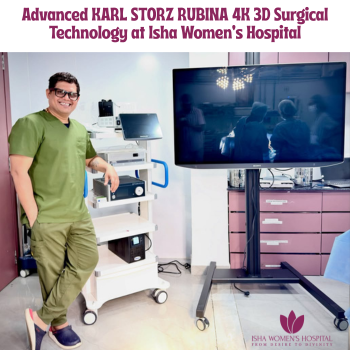
A Landmark Moment for Women’s Healthcare in Thane District
Isha Women’s Hospital has become the first hospital in Thane District to introduce the KARL STORZ RUBINA 4K 3D NIR/ICG Surgical System, one of the most advanced visualization platforms currently available in minimally invasive surgery.
For patients, this means access to sophisticated surgical technology that was previously available primarily in select tertiary-care institutions and major metropolitan centers.
For surgeons, it means greater clarity, enhanced depth perception, and real-time fluorescence guidance during complex procedures.
For the region, it represents a significant advancement in local healthcare infrastructure.
At Isha Women’s Hospital & IVF Centre, our vision has always been simple:
Bring world-class women’s healthcare closer to the community without requiring patients to travel far from home.
The introduction of the KARL STORZ RUBINA platform is an important step toward that goal.
Key Takeaways
- Isha Women’s Hospital is the first hospital in Thane District to introduce the KARL STORZ RUBINA 4K 3D NIR/ICG Surgical Platform.
- The technology provides ultra-high-definition 4K imaging with true 3D visualization.
- Near Infrared (NIR) and Indocyanine Green (ICG) fluorescence imaging help assess blood flow and tissue perfusion in real time.
- Enhanced visualization may support greater surgical precision during complex gynecological procedures.
- Patients in Dombivli, Kalyan, Thane, Navi Mumbai, and surrounding regions can now access globally recognized surgical innovation closer to home.
- The technology strengthens Isha Women’s Hospital’s position as a leading center for advanced gynecology, fertility, and minimally invasive surgery.
Why Advanced Surgical Visualization Matters
Modern minimally invasive surgery depends heavily on what surgeons can see.
The clearer the visualization, the more accurately critical structures can be identified and preserved.
In gynecological surgery, precision is particularly important because surgeons frequently work around:
- Delicate reproductive organs
- Blood vessels
- Nerves
- Ureters
- Fertility-preserving structures
Even small improvements in visualization can significantly enhance surgical decision-making.
As surgical technology evolves, imaging systems are becoming increasingly important partners in improving procedural accuracy and patient safety.
What Is KARL STORZ RUBINA 4K 3D NIR/ICG Technology?
The KARL STORZ RUBINA platform combines 4K ultra-high-definition imaging, true 3D visualization, and Near Infrared (NIR) fluorescence-guided surgery into a single advanced surgical system.
Key Features
| Feature | Benefit |
|---|---|
| 4K Resolution | Exceptional image clarity |
| 3D Visualization | Enhanced depth perception |
| NIR Imaging | Improved tissue visualization |
| ICG Fluorescence | Real-time blood flow assessment |
Unlike traditional surgical systems that rely solely on standard camera visualization, RUBINA allows surgeons to view anatomy with remarkable detail and precision.
This enhanced visibility can be particularly valuable during complex gynecological procedures where preserving healthy tissue is essential.
What Does NIR/ICG Mean?
One of the most innovative aspects of this technology is its fluorescence-guided imaging capability.
NIR (Near Infrared Imaging)
Near-infrared imaging allows surgeons to visualize structures that may not be clearly visible under standard surgical lighting.
ICG (Indocyanine Green)
Indocyanine Green is a fluorescent dye that has been used safely in medicine for decades.
When injected into the bloodstream, ICG fluoresces under near-infrared light.
This enables surgeons to assess:
- Blood vessel pathways
- Tissue perfusion
- Vascular integrity
- Organ blood supply
Why This Matters
Real-time blood flow assessment helps surgeons make informed decisions during procedures.
It adds an additional layer of information beyond what can be seen with conventional imaging alone.
The ability to assess tissue perfusion in real time is one of the most exciting aspects of fluorescence-guided surgery. Better visualization supports more informed surgical decision-making.
— Dr. Chinmay Pataki
How 4K 3D Visualization Improves Surgical Precision
4K 3D technology provides surgeons with clearer images and realistic depth perception, helping them navigate complex anatomy more accurately.
Traditional Imaging vs RUBINA 4K 3D
| Traditional Systems | RUBINA 4K 3D System |
|---|---|
| Standard definition | Ultra-HD 4K imaging |
| Limited depth perception | True 3D visualization |
| Less anatomical detail | Enhanced tissue clarity |
| Conventional visualization | Advanced fluorescence guidance |
Benefits for Surgeons
- Improved anatomical recognition
- Better visualization of delicate structures
- Enhanced depth perception
- Increased confidence during complex procedures
- Better distinction between tissues
In minimally invasive surgery, precision often depends on millimeter-level accuracy.
Advanced visualization supports that precision.
Real-Time Fluorescence Guidance During Surgery
Fluorescence imaging enables surgeons to evaluate blood flow dynamically during procedures.
Potential advantages include:
- Identification of vascular structures
- Tissue viability assessment
- Perfusion monitoring
- Surgical planning support
While surgical outcomes always depend on multiple factors, enhanced visualization may assist in reducing uncertainty during complex operations.
Applications in Advanced Gynecological Surgery
The KARL STORZ RUBINA system supports a broad range of minimally invasive gynecological procedures.
Common Applications Include:
- Laparoscopic hysterectomy
- Fibroid surgery (myomectomy)
- Ovarian cyst removal
- Endometriosis surgery
- Fertility-preserving procedures
- Complex pelvic surgery
These procedures often require detailed visualization of reproductive structures and surrounding anatomy.
Why This Technology Is Particularly Valuable in Endometriosis Surgery
Endometriosis remains one of the most challenging gynecological conditions to diagnose and treat surgically.
Lesions can be:
- Tiny
- Deeply infiltrative
- Hidden within pelvic structures
- Difficult to differentiate from normal tissue
Advanced visualization may assist surgeons in identifying disease more accurately.
Dr. Chinmay Pataki Explains
Endometriosis surgery requires meticulous attention to detail. Enhanced visualization allows us to assess anatomy more clearly and operate with greater precision.
For women experiencing severe pelvic pain, infertility, or recurrent endometriosis symptoms, technological advancements continue to improve surgical capabilities.
Supporting Fertility-Preserving Surgery and Benefits for Patients
One of the most important goals in modern gynecology is preserving reproductive potential whenever possible.
For women who plan future pregnancies, protecting healthy ovarian and reproductive tissue is critical.
Enhanced visualization helps surgeons:
- Identify healthy ovarian tissue
- Preserve reproductive structures
- Differentiate diseased tissue from normal tissue
- Optimize surgical planning
This is particularly relevant for women undergoing surgery for:
- Endometriosis
- Ovarian cysts
- Fibroids
- Fertility-related conditions
Minimally Invasive Surgery Advantages
Patients undergoing laparoscopic procedures may experience:
Potential Benefits
- Smaller incisions
- Less postoperative discomfort
- Reduced hospital stay
- Faster recovery
- Earlier return to daily activities
- Improved cosmetic outcomes
Advanced imaging technology complements these benefits by supporting greater surgical precision.
Access to World-Class Technology Closer to Home
Historically, patients seeking the latest surgical technologies often had to travel to major metropolitan hospitals.
Today, women in:
- Dombivli
- Kalyan
- Thane
- Navi Mumbai
- Ambernath
- Badlapur
- Ulhasnagar
can access advanced surgical care closer to home.
This reduces logistical challenges and improves accessibility for local families.
Why This Achievement Matters for Thane District and A Commitment to Continuous Innovation
The introduction of KARL STORZ RUBINA technology is more than a hospital upgrade.
It reflects a broader commitment to raising the standard of women's healthcare in the region.
KARL STORZ is internationally recognized for innovation in minimally invasive surgery.
By adopting this technology, Isha Women’s Hospital joins a growing group of institutions worldwide embracing advanced surgical visualization.
What This Means for the Community
- Greater access to innovation
- Enhanced surgical capabilities
- Advanced gynecological care locally
- Reduced need to travel for specialized procedures
Expertise Matters as Much as Technology
While advanced equipment is important, technology alone does not perform surgery.
Successful outcomes depend on:
- Clinical judgment
- Surgical expertise
- Patient selection
- Careful planning
- Individualized treatment
Dr. Chinmay Pataki’s Perspective
Technology is most powerful when combined with experience. Advanced visualization enhances what skilled surgeons can do, but patient-centered decision-making remains at the heart of quality care.
At Isha Women’s Hospital, technology is used as a tool to support evidence-based medicine—not replace it.
A Commitment to Continuous Innovation
Healthcare continues to evolve rapidly.
Our commitment is not simply to adopt technology, but to invest in innovations that offer meaningful value to patients.
The introduction of the KARL STORZ RUBINA platform reflects our ongoing focus on:
- Surgical excellence
- Patient safety
- Minimally invasive care
- Fertility preservation
- Women's health innovation
A New Era of Surgical Care in Thane District
The arrival of the KARL STORZ RUBINA 4K 3D NIR/ICG Surgical System marks an important milestone for women’s healthcare in the region.
As the first hospital in Thane District to introduce this technology, Isha Women’s Hospital & IVF Centre, Dombivli continues its mission of combining medical expertise with cutting-edge innovation.
For patients, it means access to advanced minimally invasive surgical care without leaving their community.
For surgeons, it means enhanced visualization and greater precision.
For Thane District, it represents a significant step forward in the future of women’s healthcare.
A Message from Dr. Chinmay Pataki
Innovation in healthcare should always serve one purpose—improving patient care. The introduction of KARL STORZ RUBINA technology strengthens our ability to deliver advanced, precision-focused surgical care while keeping patients at the center of every decision.
Frequently Asked Questions (FAQs)
1. What is KARL STORZ RUBINA 4K 3D NIR/ICG technology?
KARL STORZ RUBINA is an advanced surgical imaging platform that combines 4K ultra-high-definition imaging, 3D visualization, and Near Infrared (NIR) fluorescence-guided surgery using Indocyanine Green (ICG) dye.
The system helps surgeons visualize anatomy, blood vessels, and tissue perfusion with exceptional clarity during minimally invasive procedures.
2. How does 4K 3D imaging improve gynecological surgery?
4K 3D imaging provides:
- Ultra-HD image quality
- Enhanced depth perception
- Better visualization of anatomical structures
- Improved identification of delicate tissues
This helps surgeons perform complex procedures with greater precision and confidence.
3. What is ICG fluorescence imaging used for during surgery?
ICG (Indocyanine Green) fluorescence imaging helps surgeons assess:
- Blood flow to tissues
- Organ perfusion
- Vascular structures
- Tissue viability
This real-time information can support surgical decision-making and enhance procedural accuracy.
4. Is KARL STORZ RUBINA technology safe for patients?
Yes.
The technology itself is designed to enhance visualization during surgery.
ICG dye has been used safely in medical practice for many years when administered appropriately.
Like any medical procedure, safety depends on patient-specific factors and clinical judgment by the treating surgeon.
5. Which gynecological surgeries can benefit from RUBINA 4K 3D technology?
The system can be used in various minimally invasive gynecological procedures, including:
- Hysterectomy
- Myomectomy (fibroid removal)
- Endometriosis surgery
- Ovarian cyst removal
- Fertility-preserving surgery
- Complex pelvic procedures
Enhanced visualization is particularly valuable in technically challenging surgeries.
6. How does fluorescence-guided surgery help in endometriosis treatment?
Endometriosis lesions can sometimes be difficult to identify.
Advanced imaging and enhanced visualization may assist surgeons in:
- Better mapping of disease
- Improved tissue differentiation
- Identification of affected areas
- Preservation of healthy surrounding tissue
This can be especially important for women concerned about future fertility.
7. Does advanced surgical technology improve recovery after surgery?
Recovery depends on many factors, including the type of procedure and individual health.
However, advanced minimally invasive surgical systems support techniques associated with:
- Smaller incisions
- Reduced tissue trauma
- Less postoperative discomfort
- Faster return to daily activities
Technology works alongside surgical expertise to support optimal outcomes.
8. Why is being the first hospital in Thane District significant?
Being the first hospital in Thane District to introduce KARL STORZ RUBINA technology means local patients can access globally recognized surgical innovation closer to home.
This reduces the need to travel to larger metropolitan centers for advanced gynecological surgical care.
9. Is advanced surgical equipment enough to guarantee better outcomes?
No.
Technology is an important tool, but successful surgical outcomes depend on:
- Surgeon expertise
- Accurate diagnosis
- Careful patient selection
- Surgical planning
- Postoperative care
The best outcomes come from combining advanced technology with experienced specialists.
10. Why did Isha Women’s Hospital invest in KARL STORZ RUBINA technology?
Isha Women’s Hospital introduced the RUBINA platform as part of its commitment to:
- Advanced women’s healthcare
- Minimally invasive surgery
- Fertility-preserving treatment
- Surgical innovation
- Patient-centered care
The goal is to provide patients in Dombivli, Thane District, and surrounding areas with access to world-class surgical technology and expertise.