
Laparoscopy for Endometriosis: Recovery Timeline and Fertility Impact
Endometriosis can affect far more than your menstrual cycle.
For many women, it causes years of pelvic pain, painful periods, painful intercourse, difficulty conceiving, and repeated visits to different doctors before the correct diagnosis is made.
One of the most common questions I hear from patients is:
Doctor, if I undergo laparoscopy for endometriosis, how long will recovery take? Will it improve my chances of getting pregnant?
The answer depends on several factors, including your age, the stage of endometriosis, ovarian reserve, and your future pregnancy plans.
The good news is that laparoscopic surgery has transformed the treatment of endometriosis.
Compared with traditional open surgery, laparoscopy offers smaller incisions, less pain, quicker recovery, and excellent visualization of pelvic organs.
For many women, it also creates an opportunity to improve quality of life and, in selected cases, fertility.
At Isha Women's Hospital & IVF Centre, Dombivli, our approach is never just about removing disease.
Our goal is to relieve symptoms while protecting reproductive health and helping women make informed decisions about future pregnancy.
Key Takeaways
- Laparoscopy is considered the gold standard for diagnosing and treating endometriosis.
- Most women recover significantly faster than after open surgery.
- Recovery varies depending on the extent of surgery performed.
- Many women notice improvement in pelvic pain after treatment.
- Fertility may improve after surgery in carefully selected patients.
- Recovery does not end when stitches heal—long-term follow-up is equally important.
- Every treatment plan should be individualized according to fertility goals.
What Is Laparoscopic Surgery for Endometriosis?
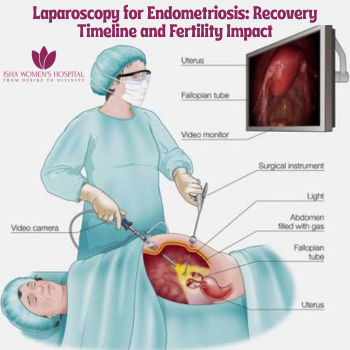
Laparoscopy is a minimally invasive surgical procedure used to diagnose and treat endometriosis through small abdominal incisions. It allows surgeons to remove endometriosis tissue, scar tissue, and ovarian cysts while preserving healthy reproductive organs whenever possible.
Understanding Laparoscopy
When I explain laparoscopy to patients, I often describe it as keyhole surgery.
Instead of making a large abdominal incision, surgery is performed through tiny openings using specialized instruments and a high-definition camera.
This allows us to see the uterus, ovaries, fallopian tubes, pelvic lining, bowel, bladder, and surrounding structures with exceptional clarity.
If endometriosis is found during the procedure, it can often be treated during the same operation.
Depending on the location and severity of disease, surgery may include:
- Removing superficial endometriosis lesions
- Excision of deep infiltrating disease
- Removing ovarian endometriomas
- Releasing scar tissue (adhesiolysis)
- Restoring normal pelvic anatomy
- Taking biopsies when diagnosis needs confirmation
One of the greatest advantages of laparoscopy is that it combines diagnosis and treatment in a single procedure.
For women with chronic pelvic pain or infertility, this can shorten the path to appropriate treatment.
Why Is Laparoscopy Considered the Gold Standard?
Although ultrasound and MRI are valuable imaging tools, they cannot detect every endometriosis lesion.
Some women have severe pain with very small lesions.
Others have advanced disease with surprisingly few symptoms.
Laparoscopy allows surgeons to directly inspect the pelvis and assess the true extent of disease.
It also makes it possible to remove visible endometriosis during the same operation.
From my experience treating women with endometriosis, careful surgical planning is just as important as surgical skill.
The goal is not simply to remove tissue.
The goal is to improve quality of life while preserving fertility whenever possible.
Why Is Laparoscopy Preferred Over Open Surgery?
Laparoscopic surgery causes less tissue trauma than open surgery. Most women experience smaller scars, reduced pain, shorter hospital stays, and faster recovery while allowing surgeons excellent visualization during complex endometriosis surgery.
Modern minimally invasive surgery has significantly changed gynecological care.
Compared with traditional open procedures, laparoscopy offers several important advantages.
| Traditional Surgery | Laparoscopic Surgery |
|---|---|
| Larger incision | Small keyhole incisions |
| More postoperative pain | Less pain in most patients |
| Longer hospital stay | Earlier discharge |
| Longer recovery | Faster return to daily activities |
| Larger scar | Minimal scarring |
Another major advantage is improved magnification.
High-definition laparoscopic systems allow surgeons to identify delicate pelvic structures more clearly.
This becomes especially important during fertility-preserving surgery, where protecting the ovaries, fallopian tubes, blood vessels, and healthy tissue is essential. Technology, however, is only one part of successful surgery.
Experience in advanced laparoscopic techniques remains equally important.
What Happens During Endometriosis Surgery?
During laparoscopic surgery, the surgeon identifies and removes endometriosis lesions, scar tissue, and ovarian cysts while preserving healthy reproductive organs whenever possible. The exact procedure depends on the severity and location of disease.
Every woman's endometriosis is different.
Some have only a few superficial spots.
Others develop extensive scar tissue involving multiple pelvic organs.
For this reason, surgery is always individualized.
Common procedures performed include:
| Surgical Procedure | Why It Is Done |
|---|---|
| Excision of endometriosis | Remove active disease |
| Adhesiolysis | Restore normal pelvic anatomy |
| Endometrioma removal | Preserve ovarian health when appropriate |
| Biopsy | Confirm diagnosis |
| Fertility-preserving surgery | Protect reproductive organs |
One question patients frequently ask me is whether every lesion should always be removed.
The answer depends on balancing symptom relief with preservation of healthy tissue.
For example, aggressive removal of an ovarian endometrioma may reduce pain but can also affect ovarian reserve if not performed carefully.
That is why surgical planning should always consider future pregnancy goals.
How Long Does Endometriosis Laparoscopy Take?
The duration of surgery depends entirely on how extensive the disease is.
Simple procedures may take around one hour. Moderate disease often requires between one and two hours.
Advanced endometriosis involving bowel, bladder, ureter, or severe adhesions may take considerably longer. Although patients often focus on operating time, I explain that the quality of surgery is far more important than speed.
Meticulous surgery may reduce future complications and improve long-term outcomes.
Recovery Timeline After Laparoscopy
Most women begin walking on the same day or the next day after laparoscopic surgery. Light activities usually resume within a week, while complete recovery commonly takes between two and six weeks depending on the extent of surgery.
The First 24 Hours
Immediately after surgery, it is normal to experience:
- Mild abdominal discomfort
- Sleepiness from anesthesia
- Shoulder pain caused by the gas used during laparoscopy
- Mild bloating
- Slight vaginal spotting
These symptoms usually improve over the next few days.
Patients are encouraged to start gentle walking as advised because early movement reduces the risk of blood clots and supports recovery.
Days 2–7
During the first week, most women notice gradual improvement.
Typical recovery includes:
| Time | What You May Experience |
|---|---|
| Day 2 | Walking more comfortably |
| Day 3 | Less abdominal pain |
| Day 4–5 | Improved appetite and energy |
| Day 6–7 | Increasing independence in daily activities |
Some fatigue is completely normal.
Your body is healing internally, even if the small skin incisions appear healthy.
One piece of advice I regularly give patients is not to compare their recovery with someone else's.
Recovery depends on:
- Stage of endometriosis
- Duration of surgery
- Extent of tissue removal
- Individual healing
- Overall health
Each woman heals differently.
Recovery During Weeks 2–6
For many women, this stage brings significant improvement.
Daily activities gradually become easier.
Most patients can return to office-based work within a couple of weeks, although physically demanding jobs may require additional recovery time.
Exercise should always be restarted gradually after medical clearance.
High-impact workouts should not be resumed until your surgeon confirms healing is progressing well.
Follow-up appointments remain an important part of recovery.
These visits allow us to:
- Assess wound healing
- Review biopsy reports if taken
- Discuss symptom improvement
- Plan fertility treatment if required
- Decide whether hormonal treatment is appropriate
Recovery from endometriosis surgery is not measured only by how quickly you return to work.
It is also measured by improvements in pain, menstrual symptoms, quality of life, and future reproductive health.
Can Laparoscopy Improve Fertility?
Yes, laparoscopic surgery may improve fertility in selected women by removing endometriosis tissue, releasing pelvic adhesions, restoring normal anatomy, and reducing inflammation. However, pregnancy outcomes depend on several factors, including age, ovarian reserve, sperm quality, and the severity of endometriosis.
One of the biggest reasons women with endometriosis undergo laparoscopic surgery is to improve their chances of conceiving.
As a fertility specialist, I always explain that laparoscopy is not a guarantee of pregnancy, but for carefully selected patients, it can create a healthier environment for natural conception or improve the effectiveness of fertility treatments.
Endometriosis affects fertility in several ways.
It can distort the normal anatomy of the pelvis, create scar tissue around the ovaries and fallopian tubes, alter the inflammatory environment, and sometimes reduce ovarian reserve.
During laparoscopic surgery, our aim is not only to remove visible disease but also to restore normal pelvic anatomy while protecting healthy ovarian tissue.
This fertility-preserving approach is especially important for women who wish to conceive in the future.
| Potential Fertility Benefit | How Surgery May Help |
|---|---|
| Removal of adhesions | Restores movement of ovaries and fallopian tubes |
| Endometrioma surgery | May improve ovarian environment in selected patients |
| Reduction of inflammation | Creates a healthier environment for fertilization |
| Restoration of pelvic anatomy | Improves the chances of natural conception |
In my clinical practice, fertility planning always begins before surgery—not after it.
The surgical approach for a 28-year-old planning pregnancy is often very different from that of a woman who has completed her family.
This individualized planning is what protects both symptom control and reproductive potential.
When Can You Start Trying for Pregnancy After Surgery?
There is no single timeline that suits every woman. The right time to try for pregnancy depends on your recovery, surgical findings, age, ovarian reserve, and overall fertility evaluation.
There is no single timeline that suits every woman. The right time to try for pregnancy depends on your recovery, surgical findings, age, ovarian reserve, and overall fertility evaluation.
Many patients ask me this question before they are discharged from the hospital.
The answer is rarely the same for everyone.
Some women may be advised to begin trying naturally after adequate healing.
Others may benefit from early fertility treatment rather than waiting for several months.
The decision depends on several important factors:
- Your age
- Ovarian reserve (AMH and AFC)
- Severity of endometriosis
- Partner's semen analysis
- Duration of infertility
- Previous surgeries
- Whether the fallopian tubes are healthy
For younger women with mild disease and no additional fertility concerns, natural conception may be appropriate after recovery.
However, for women over 35 or those with diminished ovarian reserve, delaying fertility treatment unnecessarily may reduce pregnancy chances.
That is why fertility planning should always be part of the discussion before surgery.
When IVF May Be Recommended After Laparoscopy
Laparoscopy is not always the final step in fertility treatment.
Sometimes it becomes the first step toward IVF.
IVF may be recommended if:
- Moderate or severe endometriosis is present.
- Both fallopian tubes are blocked or severely damaged.
- Ovarian reserve is reduced.
- There is associated male factor infertility.
- Pregnancy has not occurred after an appropriate period following surgery.
- Previous fertility treatments have failed.
One common misconception is that every woman with endometriosis requires IVF.
That simply isn't true.
Many women conceive naturally after surgery.
Others may benefit from ovulation induction or IUI before IVF is considered.
Treatment decisions should always be individualized rather than following a one-size-fits-all approach.
Managing Symptoms After Surgery - Will Endometriosis Come Back?
Endometriosis is a chronic condition, and recurrence is possible even after successful surgery. The likelihood varies depending on disease severity, age, hormonal factors, and whether long-term medical management is appropriate.
This is one of the most honest conversations I have with patients.
Laparoscopic surgery removes visible disease. However, surgery cannot completely change the biological tendency to develop endometriosis. That means symptoms may return in some women over time.
Recurrence depends on several factors.
| Factor | Influence on Recurrence |
|---|---|
| Stage of disease | Advanced disease may have a higher recurrence risk |
| Age | Younger women have longer reproductive years ahead |
| Hormonal therapy | May reduce recurrence in selected women |
| Pregnancy | Symptoms often improve temporarily during pregnancy |
Fortunately, recurrence does not mean symptoms will always become severe again.
Many women remain symptom-free for years after expert surgery.
The key is regular follow-up and early treatment if symptoms begin to return.
Medications After Laparoscopy
Recovery doesn't always end with surgery.
Some women benefit from medications after the procedure.
Depending on your symptoms and future pregnancy plans, treatment may include:
- Pain-relieving medications
- Hormonal tablets
- Progesterone therapy
- Hormonal intrauterine systems in selected patients
For women actively planning pregnancy, hormonal suppression is usually avoided because it prevents ovulation.
This is why post-operative treatment should always match your fertility goals.
Lifestyle Changes That Support Recovery
Although lifestyle changes cannot cure endometriosis, they support overall recovery and long-term reproductive health.
I encourage patients to focus on habits that reduce inflammation and improve general well-being.
Helpful strategies include:
- Eating a balanced diet rich in vegetables, fruits, whole grains, and lean protein.
- Maintaining a healthy body weight.
- Gradually returning to regular physical activity after medical clearance.
- Prioritizing quality sleep.
- Managing stress through relaxation techniques, yoga, or mindfulness.
Many women also notice improvements in energy levels after correcting anemia or nutritional deficiencies that often accompany heavy menstrual bleeding.
Lifestyle changes work best when combined with appropriate medical care—not as a replacement for treatment.
When Should You Contact Your Doctor?
Most women recover smoothly after laparoscopy, but certain symptoms require prompt medical evaluation. Severe pain, fever, heavy bleeding, or wound infection should never be ignored.
Although complications after laparoscopic surgery are uncommon, recognizing warning signs early is extremely important.
Contact your healthcare provider immediately if you develop:
| Warning Sign | What It Could Indicate |
|---|---|
| Fever above 38°C | Possible infection |
| Heavy vaginal bleeding | Needs urgent evaluation |
| Severe abdominal pain | Possible surgical complication |
| Persistent vomiting | Dehydration or bowel concerns |
| Increasing redness around wounds | Wound infection |
| Foul-smelling discharge | Infection |
| Difficulty passing urine | Requires assessment |
Patients often worry about mild shoulder pain after surgery.
This usually occurs because of the carbon dioxide gas used during laparoscopy and generally settles within a few days. However, worsening pain rather than improving pain should always be discussed with your surgeon.
Why Follow-Up Appointments Matter
Healing cannot always be judged from the outside.
Follow-up appointments allow us to assess how recovery is progressing internally.
During these visits we may:
- Review pathology reports
- Evaluate symptom improvement
- Discuss menstrual cycles
- Plan pregnancy timing
- Adjust medications
- Monitor ovarian reserve if required
These appointments are just as important as the surgery itself because they help us create the next stage of your treatment plan.
Advanced Endometriosis Care at Isha Women's Hospital & IVF Centre
At Isha Women's Hospital & IVF Centre, Dombivli, endometriosis care is based on three equally important principles:
- Accurate diagnosis
- Fertility preservation
- Long-term symptom control
Every woman receives an individualized evaluation before surgery.
This includes:
- Detailed menstrual history
- Pelvic examination
- High-resolution ultrasound
- Fertility assessment when appropriate
- Ovarian reserve testing
- Personalized surgical planning
As an advanced laparoscopic surgeon, my goal is always to remove disease safely while preserving healthy reproductive tissue whenever possible.
Successful endometriosis surgery is not simply about removing lesions.
It is about helping women return to a healthier, more comfortable life while protecting future fertility whenever possible.
Fertility Care After Surgery
Recovery does not stop once surgery is complete.
Many women benefit from ongoing fertility planning after healing.
Depending on individual needs, care may include:
- AMH and ovarian reserve assessment
- Ovulation monitoring
- Fertility counseling
- Lifestyle optimization
- Timed intercourse guidance
- IUI
- IVF
- ICSI when indicated
Every recommendation is based on evidence, reproductive goals, and the couple's complete fertility profile.
Final Thoughts from Dr. Chinmay Pataki
Endometriosis is a complex condition that often affects much more than the menstrual cycle. It can influence physical health, emotional well-being, relationships, work, and future fertility.
Laparoscopic surgery has transformed the way we diagnose and treat this condition. For many women, it offers meaningful relief from pain, restores normal pelvic anatomy, and creates better opportunities for pregnancy.
However, surgery is only one part of long-term care. Successful outcomes depend on accurate diagnosis, expert surgical technique, appropriate recovery, regular follow-up, and individualized fertility planning.
At Isha Women's Hospital & IVF Centre, Dombivli, we believe every woman deserves treatment that is compassionate, evidence-based, and designed around her future goals.
Whether your priority is pain relief, preserving fertility, or planning a healthy pregnancy, the right treatment begins with understanding your unique situation.
Endometriosis should never be managed with a one-size-fits-all approach. Every woman's symptoms, fertility goals, and stage of disease are different. Thoughtful surgical planning, careful recovery, and personalized fertility guidance can make a meaningful difference in long-term outcomes. — Dr. Chinmay Pataki
Frequently Asked Questions (FAQs)
1. Is laparoscopy the best treatment for endometriosis?
Laparoscopy is considered the gold standard for diagnosing and treating endometriosis because it allows surgeons to directly visualize, confirm, and remove endometriosis lesions during the same procedure. Whether it is the best treatment depends on your symptoms, fertility goals, age, and the severity of the disease. Your gynecologist will recommend the most appropriate approach after a detailed evaluation.
2. How long does it take to recover from endometriosis laparoscopy?
Most women return to light daily activities within 5–7 days after laparoscopic surgery. Complete recovery usually takes 2–6 weeks, depending on the extent of surgery, individual healing, and whether additional procedures such as endometrioma removal or adhesion surgery were performed.
3. Can I get pregnant naturally after laparoscopic surgery for endometriosis?
Yes. Many women conceive naturally after laparoscopic treatment, particularly those with mild to moderate endometriosis and good ovarian reserve. Fertility outcomes depend on factors such as age, egg quality, fallopian tube function, sperm health, and the severity of endometriosis. If pregnancy does not occur within the recommended timeframe, fertility treatments like IUI or IVF may be considered.
4. How soon after laparoscopy can I start trying for pregnancy?
The ideal time varies for every woman. Many fertility specialists recommend trying naturally after adequate healing, often within a few months if there are no other fertility concerns. Your doctor will guide you based on your age, ovarian reserve, surgical findings, and reproductive goals.
5. Does laparoscopic surgery cure endometriosis permanently?
No. Endometriosis is a chronic condition, and surgery does not permanently cure it. Laparoscopy removes visible endometriosis tissue and can significantly reduce pain and improve fertility, but recurrence is possible. Long-term management, regular follow-ups, and hormonal therapy (when appropriate) may help reduce the risk of recurrence.
6. Can endometriosis come back after laparoscopic surgery?
Yes. Endometriosis can recur, especially in women with advanced-stage disease or if microscopic lesions remain. Recurrence rates vary, and factors such as age, hormonal treatment, and future pregnancy plans influence long-term outcomes. Regular gynecological follow-up is recommended.
7. Will laparoscopic surgery improve IVF success in women with endometriosis?
In selected women, laparoscopic surgery may improve the pelvic environment before IVF by removing adhesions, endometriomas, or inflammatory tissue. However, surgery is not necessary before every IVF cycle. The decision depends on ovarian reserve, disease severity, previous surgeries, age, and fertility history. A fertility specialist can recommend the best approach.
8. What foods should I eat after endometriosis laparoscopy?
A balanced, nutrient-rich diet may support recovery. Focus on lean proteins, fruits, vegetables, whole grains, healthy fats, and adequate hydration. Foods rich in iron, vitamin C, omega-3 fatty acids, and antioxidants may support healing. Limiting processed foods and excessive sugar may also help reduce inflammation. Dietary advice should be individualized by your healthcare provider.
9. What warning signs should I watch for after laparoscopic surgery?
Contact your doctor immediately if you experience high fever, increasing abdominal pain, heavy vaginal bleeding, persistent vomiting, difficulty breathing, foul-smelling wound discharge, redness around the incision, or inability to pass urine. Early medical evaluation helps prevent complications.
10. How do I choose the right surgeon for endometriosis laparoscopy?
Choose a gynecologist or minimally invasive gynecologic surgeon with experience in diagnosing and treating endometriosis. Consider factors such as expertise in advanced laparoscopy, fertility-preserving surgery, hospital infrastructure, patient-centered care, and access to multidisciplinary fertility services. Experienced surgeons are better equipped to manage complex endometriosis while preserving reproductive health whenever possible.