
Normal Sperm Count but High DNA Fragmentation: Causes, Diagnosis and Treatment
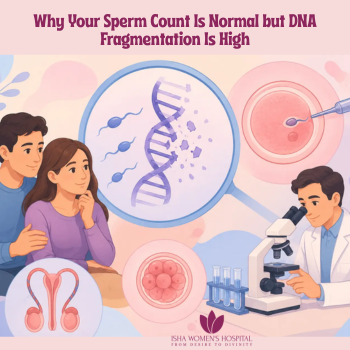
One of the most confusing situations for couples is hearing that the husband's semen analysis is normal, yet pregnancy still isn't happening.
I've seen this many times in my fertility practice.
The couple is relieved after seeing a healthy sperm count, good motility, and acceptable morphology. They naturally assume male fertility is no longer a concern.
But after months—or sometimes years—of trying to conceive, repeated IVF failures, or recurrent miscarriages, we discover another factor that routine semen analysis cannot detect: high sperm DNA fragmentation.
This is one of the most commonly overlooked causes of unexplained infertility.
It is also one of the biggest reasons why couples should never rely on sperm count alone when evaluating male fertility.
In this article, I'll explain what sperm DNA fragmentation means, when it matters, who should be tested, and how we approach treatment at Isha Women's Hospital & IVF Centre.
Key Takeaways
- A normal sperm count does not guarantee normal fertility.
- Sperm DNA fragmentation cannot be detected through routine semen analysis.
- High DNA fragmentation may contribute to infertility, recurrent miscarriage, poor embryo development, and repeated IVF failure.
- Oxidative stress is the most common cause.
- Lifestyle improvement and treatment of underlying conditions may improve sperm DNA quality.
- Testing should be recommended selectively—not every man requires it.
- Expert interpretation is just as important as the test itself.
Understanding Sperm DNA Fragmentation
What Is Sperm DNA Fragmentation?
Most men are familiar with terms like sperm count or sperm motility.
Very few know that the DNA inside each sperm is equally important.
Every sperm carries genetic information that combines with the egg to create an embryo.
When this DNA becomes damaged or fragmented, fertilization may still occur—but embryo development can be affected.
Think of it this way.
A sperm may look completely healthy under the microscope.
It may swim well.
Its shape may appear normal.
Yet internally, the genetic instructions it carries may already be damaged.
That hidden damage is called sperm DNA fragmentation.
Why a Normal Sperm Count Doesn't Tell the Whole Story
A routine semen analysis evaluates:
- Sperm concentration
- Motility
- Morphology
- Semen volume
It does not evaluate whether the genetic material inside those sperm cells is intact.
This explains why some couples experience:
- Unexplained infertility
- Repeated IVF failure
- Good fertilization but poor embryo quality
- Recurrent miscarriage
Despite having normal reports.
Understanding the Difference Between Semen Analysis and DNA Testing
Routine Semen Analysis vs DNA Fragmentation Testing
| Routine Semen Analysis | DNA Fragmentation Test |
|---|---|
| Sperm count | DNA integrity |
| Motility | Chromatin quality |
| Morphology | DNA damage |
| Volume | Genetic stability |
These tests answer completely different questions.
One measures how sperm behave.
The other measures whether sperm carry healthy genetic material.
Why Every Man Does Not Need DNA Fragmentation Testing
One mistake I frequently see online is the recommendation that every infertile man should undergo DNA fragmentation testing.
Current evidence does not support routine testing for everyone.
Instead, fertility specialists recommend it selectively.
Typical situations include:
- Recurrent miscarriage
- Repeated IVF failure
- Repeated ICSI failure
- Unexplained infertility
- Clinical varicocele
- Advanced paternal age
The right test should always answer an important clinical question.
Common Causes of High Sperm DNA Fragmentation
Oxidative Stress: The Leading Cause
One of the most common reasons for high sperm DNA fragmentation is oxidative stress. This happens when harmful molecules called reactive oxygen species (ROS) outnumber the body's natural antioxidant defenses. Over time, these molecules can damage the DNA inside sperm cells, even when the sperm count and movement appear normal.
| Source of Oxidative Stress | How It Can Affect Sperm DNA |
|---|---|
| Smoking | Increases DNA damage and oxidative stress |
| Obesity | Promotes chronic inflammation |
| Poor diet | Reduces antioxidant protection |
| Air pollution | Increases cellular stress |
| Diabetes and chronic illnesses | Can impair sperm quality |
| Persistent psychological stress | May indirectly affect reproductive health |
Unlike routine semen parameters, DNA fragmentation reflects the genetic health of sperm, making it an important consideration in selected fertility cases.
At Isha Women's Hospital & IVF Centre, Dr. Chinmay Pataki emphasizes identifying the underlying cause rather than simply treating a laboratory report. Addressing oxidative stress through lifestyle changes and medical evaluation may help improve overall reproductive health.
Expert Insight – Dr. Chinmay Pataki:
A healthy-looking sperm under the microscope may still carry damaged DNA. Our focus is to understand why that damage is occurring so we can recommend targeted treatment.
Varicocele and DNA Damage
A varicocele is an enlargement of the veins surrounding the testicle and is one of the most common correctable causes of male infertility.
Many men with varicocele have:
- Normal sperm count
- Normal motility
- Normal sexual function
Yet they may still have elevated sperm DNA fragmentation.
The enlarged veins increase the temperature around the testicles and may reduce oxygen supply, leading to oxidative stress and damage to developing sperm.
Not every varicocele requires surgery. The decision depends on several factors, including symptoms, fertility goals, semen parameters, and overall clinical findings. When appropriate, treatment may improve sperm quality in selected patients.
Age and Sperm DNA Quality
Although male fertility declines more gradually than female fertility, age still influences sperm health.
As men grow older:
- DNA repair mechanisms become less efficient.
- Oxidative stress tends to increase.
- Genetic errors within sperm may become more common.
Advanced paternal age has been associated with a higher likelihood of sperm DNA damage in some studies. However, age alone does not determine fertility.
Many healthy men become fathers later in life. Instead of focusing on age in isolation, fertility specialists evaluate the complete clinical picture, including the couple's medical history, reproductive goals, and fertility investigations.
Other Hidden Causes Doctors Commonly Find
Infections and Inflammation
Certain infections and inflammatory conditions can silently affect sperm quality without causing noticeable symptoms.
| Medical Condition | Possible Effect on Fertility |
|---|---|
| Prostatitis | Inflammation affecting sperm health |
| Epididymitis | Can impair sperm maturation |
| Untreated STIs | May damage reproductive tissues |
| Chronic genital infections | Increased oxidative stress |
| Long-standing inflammation | DNA damage and reduced fertility potential |
Some men have completely normal semen reports despite underlying inflammation.
If infections are identified, prompt treatment may improve reproductive health and reduce ongoing damage. Persistent infections should never be ignored, particularly in couples experiencing unexplained infertility.
Lifestyle Habits That Affect DNA Quality
Daily habits have a significant influence on sperm health because sperm production takes approximately 74–90 days.
Lifestyle factors associated with increased DNA fragmentation include:
- Smoking tobacco
- Excessive alcohol intake
- Recreational drug use
- Obesity
- Poor sleep quality
- Chronic stress
- Sedentary lifestyle
- Diets low in fruits and vegetables
The encouraging news is that many of these factors are modifiable. Small, consistent improvements often benefit overall reproductive health and may improve sperm quality over time.
Environmental and Occupational Exposures
Modern lifestyles expose many men to environmental factors that may influence fertility.
Potential contributors include:
- Industrial chemicals
- Pesticides
- Heavy metals
- Air pollution
- Excessive heat exposure
- Radiation in specific occupations
Men who work in industries involving prolonged heat exposure, chemicals, or radiation should discuss occupational risks with their fertility specialist. Although research continues in this area, reducing unnecessary exposure where possible is considered a sensible preventive approach.
How DNA Fragmentation Affects Fertility
Can High DNA Fragmentation Prevent Pregnancy?
High sperm DNA fragmentation does not always prevent pregnancy, but it may reduce the likelihood of a healthy conception in some couples.
Depending on the clinical situation, elevated DNA fragmentation has been associated with:
| Stage | Possible Effect |
|---|---|
| Fertilization | May reduce fertilization efficiency |
| Embryo development | May affect embryo quality |
| Implantation | Lower implantation potential in some cases |
| Pregnancy | Increased miscarriage risk in selected patients |
It's important to understand that DNA fragmentation is only one part of fertility.
Pregnancy also depends on:
- Female age
- Egg quality
- Uterine health
- Embryo genetics
- Overall reproductive health of both partners
This is why fertility specialists interpret DNA fragmentation results within the broader clinical context rather than in isolation.
DNA Fragmentation and IVF/ICSI Success
Many couples wonder whether IVF or ICSI automatically overcomes high DNA fragmentation.
The answer is more nuanced. While ICSI helps address fertilization issues by injecting a single sperm directly into the egg, it does not repair damaged sperm DNA.
In couples with repeated IVF or ICSI failure, recurrent miscarriage, or unexplained infertility, sperm DNA fragmentation may be one factor considered during treatment planning.
Dr. Chinmay Pataki believes treatment should always be individualized rather than based on a single laboratory value. The goal is to identify the underlying cause and recommend the most appropriate evidence-based fertility strategy for each couple.
Can High DNA Fragmentation Be Improved?
Lifestyle Changes That May Support Sperm DNA Health
One of the first questions couples ask is, Can sperm DNA fragmentation be reversed?
The answer depends on what is causing the DNA damage.
Unlike permanent genetic conditions, many factors that contribute to sperm DNA fragmentation are modifiable. Since sperm take approximately 74–90 days to develop, improvements made today may be reflected in sperm quality over the next two to three months.
Simple lifestyle changes can make a meaningful difference to overall reproductive health.
| Healthy Habit | How It May Help |
|---|---|
| Quit smoking | Reduces oxidative stress and DNA damage |
| Eat an antioxidant-rich diet | Supports healthy sperm production |
| Exercise regularly | Improves hormonal and metabolic health |
| Maintain a healthy weight | Reduces inflammation |
| Get 7–8 hours of quality sleep | Supports hormone regulation |
| Manage stress | Promotes overall reproductive wellness |
| Limit alcohol intake | Helps maintain healthier sperm function |
Foods rich in vitamins C and E, zinc, selenium, omega-3 fatty acids, and fresh fruits and vegetables support the body's natural antioxidant defenses.
However, lifestyle changes are not a substitute for medical evaluation. If DNA fragmentation is caused by a condition such as varicocele, infection, or hormonal imbalance, addressing the underlying problem is equally important.
Dr. Chinmay Pataki explains:
Healthy sperm production is influenced by everyday habits. Small improvements, when combined with the right medical guidance, often create the best environment for better reproductive health.
Medical Treatments That May Be Recommended
There is no single treatment that works for every man with high sperm DNA fragmentation.
The most effective approach is to first identify why the DNA damage is occurring.
Depending on the underlying cause, treatment may include:
- Treating genital or urinary tract infections
- Managing hormonal imbalances
- Surgical treatment for clinically significant varicocele
- Addressing uncontrolled diabetes or thyroid disorders
- Lifestyle counselling
- Antioxidant therapy in selected patients under medical supervision
Some men may benefit from repeat testing after treatment to evaluate whether sperm DNA quality has improved.
For couples planning assisted reproduction, fertility specialists may also recommend the most appropriate technique based on the complete clinical picture rather than DNA fragmentation results alone.
Every treatment decision should consider:
- Female partner's age
- Duration of infertility
- Previous IVF or ICSI outcomes
- Recurrent pregnancy loss history
- Overall reproductive health of both partners
The goal is not simply to improve laboratory numbers but to maximize the chances of achieving a healthy pregnancy.
Advanced Male Fertility Care at Isha Women's Hospital & IVF Centre
Comprehensive Male Fertility Evaluation
Male fertility deserves the same level of attention as female fertility.
At Isha Women's Hospital & IVF Centre, Dombivli, fertility evaluation is designed around the couple rather than focusing on only one partner.
Under the guidance of Dr. Chinmay Pataki, every male fertility assessment begins with a detailed discussion about medical history, lifestyle, previous pregnancies, and fertility goals.
Depending on individual needs, the evaluation may include:
- Detailed reproductive history
- Physical examination
- Standard semen analysis
- Hormonal assessment
- Scrotal ultrasound when indicated
- Sperm DNA fragmentation testing in selected cases
- Additional advanced investigations where clinically appropriate
Instead of relying on a single laboratory report, the findings are interpreted alongside the female partner's fertility evaluation to understand the complete picture.
This comprehensive approach helps avoid unnecessary treatments while ensuring that important male fertility factors are not overlooked.
Individualized Fertility Treatment Options
Every couple's fertility journey is unique.
Some couples may conceive after correcting lifestyle factors or treating an underlying medical condition, while others may benefit from assisted reproductive techniques.
Based on the evaluation, treatment options may include:
- Lifestyle optimization
- Medical management
- Hormonal therapy
- Treatment of infections
- Varicocele management when appropriate
- Intrauterine Insemination (IUI)
- In Vitro Fertilization (IVF)
- Intracytoplasmic Sperm Injection (ICSI)
Treatment recommendations are always personalized.
Dr. Chinmay Pataki believes that successful fertility care is not about offering the most advanced treatment first—it is about recommending the right treatment at the right time.
Couples are guided through every stage with clear explanations, realistic expectations, and evidence-based recommendations.
This patient-centred approach allows couples to make informed decisions with confidence.
How Doctors Interpret DNA Fragmentation Results — It's More Than Just a Number
What Does a High DNA Fragmentation Score Actually Mean?
Receiving a report that says high sperm DNA fragmentation can be worrying, but the number alone does not determine your chances of becoming a father.
Different laboratories use different testing methods, such as SCSA (Sperm Chromatin Structure Assay), TUNEL assay, SCD (Sperm Chromatin Dispersion), or the Comet assay. Because these tests measure DNA damage differently, results should always be interpreted using the laboratory's reference ranges and your overall clinical picture.
At Isha Women's Hospital & IVF Centre, Dr. Chinmay Pataki emphasizes that no fertility test should be viewed in isolation. Instead, DNA fragmentation results are evaluated alongside:
- Semen analysis findings
- Female partner's age and ovarian reserve
- Duration of infertility
- Previous pregnancies or miscarriages
- IVF or ICSI treatment history
- Lifestyle factors
- Medical conditions such as varicocele or diabetes
For example, a mildly elevated DNA fragmentation score in a young couple trying to conceive for a few months may be managed differently than the same result in a couple with recurrent pregnancy loss or repeated IVF failure.
Dr. Chinmay Pataki explains:
Our goal isn't simply to treat a laboratory value. We treat the couple sitting in front of us. Every fertility plan is individualized because every reproductive journey is different.
This personalized approach helps avoid unnecessary anxiety while ensuring that important fertility factors are not overlooked.
Protecting Male Fertility Before Planning Pregnancy
Small Changes Today Can Improve Future Fertility
Many men don't think about fertility until pregnancy becomes difficult.
However, male reproductive health begins long before couples start trying to conceive.
Healthy sperm production depends on overall health, and even small lifestyle improvements may support better reproductive outcomes over time.
If you're planning to become a father, consider these evidence-based habits:
- Maintain a healthy body weight.
- Exercise regularly without overtraining.
- Eat a balanced diet rich in fruits, vegetables, whole grains, lean proteins, and healthy fats.
- Avoid smoking, vaping, and recreational drugs.
- Limit alcohol intake.
- Sleep for 7–8 hours each night.
- Manage chronic medical conditions such as diabetes and hypertension.
- Reduce prolonged exposure to excessive heat, such as hot tubs, saunas, or placing laptops directly on the lap for long periods.
- Seek early medical advice if you notice testicular swelling, pain, or a history of undescended testes.
Planning for pregnancy is a shared responsibility between both partners.
Just as women are encouraged to optimize their health before conception, men also benefit from adopting healthy habits several months before trying to conceive because sperm take approximately three months to mature.
At Isha Women's Hospital & IVF Centre, Dr. Chinmay Pataki encourages couples to view fertility as a team effort.
Preparing for pregnancy doesn't begin with IVF or fertility treatment—it begins with understanding your reproductive health early. Simple preventive steps today may positively influence tomorrow's fertility journey.
Frequently Asked Questions (FAQs)
1. Can I have a normal sperm count but still have fertility problems?
Yes. A normal sperm count is reassuring, but it does not guarantee normal fertility. Standard semen analysis measures the number, movement (motility), and shape (morphology) of sperm, but it does not assess the quality of the genetic material inside the sperm. Conditions such as high sperm DNA fragmentation, hormonal imbalances, varicocele, infections, or genetic abnormalities can affect fertility even when routine semen parameters appear normal. If pregnancy has not occurred despite a normal semen analysis, a fertility specialist may recommend additional testing based on your medical history.
2. What is a sperm DNA fragmentation test, and who should get one?
A sperm DNA fragmentation test evaluates the integrity of the DNA carried within sperm cells. Unlike a routine semen analysis, it detects breaks or damage in the sperm's genetic material. Doctors may recommend this test for men with unexplained infertility, recurrent miscarriages, repeated IVF or ICSI failures, clinical varicocele, or advanced paternal age. It is not a routine fertility test for every man but can provide valuable information in selected clinical situations.
3. What causes high sperm DNA fragmentation?
High sperm DNA fragmentation is most commonly associated with oxidative stress, which damages the genetic material inside sperm. Other contributing factors include smoking, obesity, varicocele, chronic infections, uncontrolled diabetes, poor diet, excessive alcohol consumption, environmental pollution, exposure to toxins, prolonged heat exposure, and increasing paternal age. Identifying and treating the underlying cause is an important part of fertility management.
4. Can high sperm DNA fragmentation cause recurrent miscarriage?
Research suggests that elevated sperm DNA fragmentation may be associated with an increased risk of recurrent pregnancy loss in some couples. Damaged sperm DNA can affect embryo development after fertilization, potentially reducing the chances of a healthy ongoing pregnancy. However, recurrent miscarriage can have multiple causes, including chromosomal abnormalities, uterine conditions, hormonal disorders, and autoimmune diseases. Both partners should undergo a comprehensive evaluation to identify contributing factors.
5. Does high sperm DNA fragmentation reduce IVF or ICSI success?
High sperm DNA fragmentation may influence fertilization, embryo development, implantation, and pregnancy outcomes in some couples undergoing IVF or ICSI. However, treatment success depends on several factors, including the woman's age, egg quality, embryo quality, uterine health, and the severity of DNA damage. Fertility specialists interpret DNA fragmentation results alongside the couple's overall clinical picture before recommending the most appropriate treatment strategy.
6. Can sperm DNA fragmentation be improved naturally?
In many cases, yes. Healthy lifestyle changes may help improve sperm DNA quality over time. Quitting smoking, maintaining a healthy weight, exercising regularly, eating an antioxidant-rich diet, limiting alcohol, managing stress, and getting adequate sleep all support healthy sperm production. Because sperm take around 74–90 days to mature, improvements may take two to three months to become noticeable. Medical treatment may also be necessary if an underlying condition such as varicocele or infection is present.
7. Is a normal semen analysis enough to rule out male infertility?
No. While a semen analysis is the first and most important test for evaluating male fertility, it cannot detect every problem. Men with normal sperm count, motility, and morphology may still have issues such as DNA fragmentation, hormonal abnormalities, genetic disorders, or sperm functional defects. If infertility remains unexplained, your fertility specialist may recommend additional investigations to identify hidden causes.
8. Does age affect sperm DNA quality?
Yes. Although men continue producing sperm throughout life, sperm DNA quality gradually declines with age. Older paternal age has been associated with increased DNA fragmentation, a higher risk of genetic mutations, and potentially reduced fertility. Many men successfully father children later in life, but age is one of several factors doctors consider during a fertility evaluation.
9. Should every man undergoing IVF have a DNA fragmentation test?
No. Current medical guidelines do not recommend routine DNA fragmentation testing for every man. The test is generally advised when there is recurrent miscarriage, unexplained infertility, repeated IVF or ICSI failure, clinical varicocele, or when routine investigations fail to explain infertility. Your fertility specialist will determine whether the test is appropriate based on your individual circumstances.
10. When should I consult a fertility specialist for male fertility concerns?
You should consider consulting a fertility specialist if you and your partner have been trying to conceive without success for 12 months (or 6 months if the female partner is over 35 years), or sooner if there is a history of recurrent miscarriages, abnormal semen analysis, varicocele, previous testicular surgery, cancer treatment, hormonal disorders, or repeated IVF failures. Early evaluation helps identify treatable causes and allows couples to make informed decisions about their fertility treatment options.