
Heavy Periods With Clots: Fibroids, Adenomyosis, or Something Else?
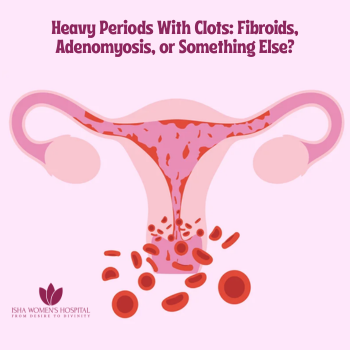
Heavy periods with clots can be uncomfortable, stressful, and sometimes a sign of an underlying gynecological condition. While occasional small clots may be part of a normal menstrual cycle, repeated heavy bleeding, large clots, severe cramps, or fatigue may be linked to uterine fibroids, adenomyosis, hormonal changes, or other conditions.
Understanding what is causing the bleeding is the first step toward finding the right treatment, especially if you are planning a pregnancy.
Key Takeaways
- Heavy periods with clots are not always normal, particularly when bleeding affects daily life.
- Uterine fibroids and adenomyosis are common causes of heavy menstrual bleeding.
- Blood clots may form when menstrual bleeding is heavy and blood accumulates faster than the body can break it down.
- Fibroids and adenomyosis are different conditions, although both can cause heavy periods and pelvic pain.
- Hormonal problems, endometrial polyps, bleeding disorders, and certain medications can also cause heavy bleeding.
- Repeated heavy periods may lead to iron deficiency or anemia.
- Ultrasound is often an important part of evaluating the cause of heavy periods.
- Treatment depends on the underlying cause, symptoms, age, medical history, and pregnancy plans.
Understanding Heavy Periods With Clots
Heavy Periods With Clots: When Is Menstrual Bleeding Too Heavy?
Heavy menstrual bleeding is bleeding that is excessive, lasts longer than expected, or significantly affects your daily life.
Doctors no longer rely only on the amount of blood lost during a period.
Instead, they consider how bleeding affects your physical health, comfort, routine, and quality of life.
You may have heavy periods if you:
- Need to change your pad or tampon very frequently.
- Bleed through your clothes or bedsheets.
- Need to use double protection.
- Have periods lasting longer than seven days.
- Pass large or frequent blood clots.
- Feel unusually tired, dizzy, or breathless during your period.
What Does It Mean If Your Period Has Blood Clots?
Blood clots during menstruation can occur naturally.
However, when menstrual bleeding becomes very heavy, blood may collect in the uterus or vagina before it is expelled, resulting in clots.
Clot size alone cannot tell you whether you have fibroids, adenomyosis, or another condition.
The important thing is the overall bleeding pattern, not just the presence of clots.
Why Do You Get Blood Clots During Your Period? And How Menstrual Blood Clots Form
During your menstrual cycle, the uterine lining thickens in preparation for pregnancy.
If pregnancy does not occur, this lining sheds during menstruation.
Your body naturally produces substances that help prevent menstrual blood from clotting excessively.
However, when bleeding becomes very heavy, blood may accumulate faster than these substances can work.
This can lead to the formation of menstrual blood clots.
When Are Period Clots Worth Investigating?
You should consider speaking to a gynecologist if you experience:
- Repeated large blood clots.
- Very heavy menstrual bleeding.
- Periods lasting more than seven days.
- Bleeding that interferes with work or daily activities.
- Severe menstrual cramps.
- Dizziness or fatigue.
- Heavy bleeding that is becoming worse over time.
Heavy periods with clots may be a sign of an underlying condition, but they are not always caused by a serious problem.
Fibroids and Heavy Periods
Can Uterine Fibroids Cause Heavy Periods With Clots? And What Are Uterine Fibroids?
Uterine fibroids, also called leiomyomas, are non-cancerous growths that develop from the muscular wall of the uterus.
They are common in women during their reproductive years.
Some women have a single fibroid, while others may have multiple fibroids.
Fibroid symptoms depend on several factors, including:
- Size.
- Number.
- Location.
- Whether the fibroid affects the uterine cavity.
How Fibroids Cause Heavy Menstrual Bleeding
Fibroids may cause heavy periods by changing the structure of the uterus and affecting the uterine lining.
Depending on their location, they may:
- Distort the uterine cavity.
- Increase the area of the uterine lining.
- Affect uterine contractions.
- Alter local blood vessels and bleeding regulation.
These changes may contribute to heavier menstrual bleeding and blood clots.
Which Fibroids Are More Likely to Cause Heavy Periods?
|
Fibroid type |
Location |
Possible impact |
|---|---|---|
|
Submucosal |
Just beneath or projecting into the uterine lining |
Often associated with heavy bleeding |
|
Intramural |
Within the uterine muscle |
May cause bleeding depending on size and cavity distortion |
|
Subserosal |
Outer surface of the uterus |
More often associated with pressure symptoms |
Fibroid location can matter more than fibroid size alone when assessing menstrual bleeding.
What Other Symptoms Suggest Fibroids? And Fibroid Symptoms Beyond Heavy Periods
Heavy periods are not the only symptom of uterine fibroids.
Some women may also experience:
- Pelvic pressure.
- Lower abdominal heaviness.
- Frequent urination.
- Constipation.
- An enlarged abdomen.
- Pain during intercourse.
- Menstrual cramps.
- Difficulty conceiving in some cases.
The symptoms depend on where the fibroids are located and how large they are.
Can Fibroids Cause Infertility?
Not all fibroids affect fertility.
Some women with fibroids conceive naturally and have healthy pregnancies.
However, fibroids that distort the uterine cavity may interfere with implantation or pregnancy in certain cases.
Treatment decisions should consider the fibroid's location, size, symptoms, and your future pregnancy plans.
Having fibroids does not automatically mean you need surgery or that you will have difficulty getting pregnant.
Adenomyosis and Heavy Periods
Can Adenomyosis Cause Heavy Periods With Clots? And What Is Adenomyosis?
Adenomyosis is a condition in which tissue similar to the uterine lining is found within the muscular wall of the uterus.
This can cause the uterine muscle to become thicker, tender, or enlarged.
Adenomyosis can cause heavy periods, painful cramps, and pelvic discomfort.
It is different from fibroids, although both conditions can occur in the same woman.
Why Adenomyosis Causes Heavy Bleeding
Adenomyosis may affect how the uterus contracts during menstruation.
It can also cause changes in the uterine muscle, inflammation, and local bleeding regulation.
These changes may contribute to heavier menstrual bleeding and painful periods.
Common Symptoms of Adenomyosis
Women with adenomyosis may experience:
- Heavy menstrual bleeding.
- Severe menstrual cramps.
- Pelvic pain.
- Pain during intercourse in some cases.
- A tender or enlarged uterus.
- Symptoms that worsen over time in some patients.
Heavy periods accompanied by painful cramps and pelvic discomfort may raise suspicion for adenomyosis, but symptoms alone cannot confirm the diagnosis.
Adenomyosis vs Fibroids: How Can You Tell the Difference?
Fibroids and adenomyosis can cause similar symptoms, making it difficult to distinguish between them without medical evaluation.
|
Feature |
Adenomyosis |
Fibroids |
|---|---|---|
|
Nature |
Endometrial-like tissue within uterine muscle |
Benign smooth-muscle growth |
|
Heavy periods |
Common |
Common, particularly with certain locations |
|
Blood clots |
Possible |
Possible |
|
Painful periods |
Often prominent |
Can occur |
|
Pelvic pressure |
Possible |
More common with larger fibroids |
|
Uterine appearance |
May be diffusely enlarged |
Often irregular or nodular |
|
Fertility impact |
Possible in some patients |
Depends on size and location |
|
Can coexist? |
Yes |
Yes |
Why Symptoms Overlap
Heavy bleeding and pelvic pain alone cannot tell you whether you have fibroids or adenomyosis.
A pelvic examination and ultrasound may help identify the underlying condition.
Sometimes, additional imaging or evaluation may be necessary.
A woman may also have both fibroids and adenomyosis at the same time.
Symptoms can suggest a diagnosis, but imaging is often needed to distinguish adenomyosis from fibroids.
Other Causes of Heavy Periods With Clots
Could Hormonal Imbalance Cause Heavy Periods? And What Happens When Ovulation Is Irregular?
Hormones such as estrogen and progesterone help regulate the menstrual cycle.
Estrogen helps the uterine lining grow, while progesterone helps regulate its development after ovulation.
When ovulation does not occur regularly, progesterone levels may not rise in the usual way.
This can result in prolonged or irregular growth of the uterine lining.
When the lining eventually sheds, bleeding may be irregular, prolonged, or heavy.
Conditions That Can Affect Hormonal Regulation
Hormonal changes may be associated with:
- PCOS (Polycystic Ovary Syndrome).
- Perimenopause.
- Thyroid disorders.
- Certain hormonal conditions.
- Adolescence, when menstrual cycles may still be developing.
What Hormonal Bleeding May Look Like
You may notice:
- Irregular periods.
- Periods that skip months.
- Prolonged bleeding.
- Sudden heavy bleeding after a delayed period.
- Bleeding between periods.
Hormonal causes are not always obvious, and the same bleeding pattern can occur with other conditions.
Heavy bleeding is not always caused by fibroids or another structural problem. Hormonal changes can also be responsible.
Can Endometrial Polyps Cause Heavy Periods? And What Are Endometrial Polyps?
Endometrial polyps are growths that develop from the inner lining of the uterus.
Many endometrial polyps are benign.
However, they may cause abnormal uterine bleeding, particularly when they affect the uterine lining.
Symptoms of Endometrial Polyps
Some women experience:
- Heavy periods.
- Bleeding between periods.
- Irregular spotting.
- Bleeding after menopause.
- Fertility concerns in selected cases.
Some women have no symptoms and discover polyps during a routine examination or fertility evaluation.
How Are Polyps Diagnosed?
Doctors may use:
- Transvaginal ultrasound.
- Saline infusion sonography in selected cases.
- Hysteroscopy.
The appropriate test depends on the symptoms and the findings during the initial examination.
Polyps can cause abnormal bleeding and may not be obvious from symptoms alone.
What Other Conditions Can Cause Heavy Menstrual Bleeding?
Heavy periods with clots may also be associated with:
- Bleeding disorders.
- Platelet disorders.
- Certain anticoagulant medications.
- Endometrial hyperplasia.
- Pregnancy-related bleeding.
- Miscarriage.
- Ectopic pregnancy.
- Certain infections.
- Endometrial cancer, particularly in women with specific risk factors or concerning symptoms.
These conditions are not equally common, and the possibility of each depends on your age, medical history, symptoms, and examination findings.
Why Pregnancy Must Sometimes Be Ruled Out
Bleeding with clots may not always be a menstrual period.
If pregnancy is possible, a pregnancy test may be necessary to determine whether the bleeding is pregnancy-related.
Heavy bleeding accompanied by severe abdominal pain, dizziness, fainting, or possible pregnancy complications requires urgent medical assessment.
Heavy bleeding should not automatically be assumed to be a period, particularly if pregnancy is possible.
How Doctors Find the Cause and What Tests Are Needed for Heavy Periods With Clots?
Step 1: Medical History and Examination
Your gynecologist may ask about:
- How long your periods last.
- How frequently you change pads.
- Whether you pass large clots.
- The severity of your menstrual pain.
- Whether bleeding occurs between periods.
- Previous pregnancies.
- Fertility plans.
- Medications.
- Family history.
- Symptoms of anemia.
These details help narrow down the possible causes.
Step 2: Blood Tests
Depending on your symptoms, your doctor may recommend blood tests.
|
Test |
Why It May Be Done |
|---|---|
|
CBC |
Checks for anemia |
|
Ferritin |
Checks iron stores |
|
Pregnancy test |
Rules out pregnancy-related bleeding |
|
Thyroid tests |
Used when thyroid disorders are suspected |
|
Coagulation tests |
Used when a bleeding disorder is suspected |
Not every woman needs every test.
Your doctor will select investigations based on your medical history and symptoms.
Step 3: Pelvic Ultrasound
A pelvic ultrasound is often used to evaluate the uterus, ovaries, and surrounding structures.
A transvaginal ultrasound, when appropriate, may help identify:
- Uterine fibroids.
- Features of adenomyosis.
- Endometrial thickness.
- Polyps or other structural findings.
- Ovarian abnormalities.
Ultrasound is particularly useful when heavy periods are associated with pelvic pain, pressure, or fertility concerns.
Step 4: Additional Tests
Additional investigations may include:
- Hysteroscopy: Allows the doctor to examine the inside of the uterus.
- Saline infusion sonography: Helps improve visualization of the uterine cavity.
- Endometrial biopsy: May be recommended in selected cases to evaluate the uterine lining.
The goal of testing is to identify the cause of bleeding, not to perform every test on every patient.
Heavy Periods and Anemia
Can Heavy Periods With Clots Cause Anemia? And What Is Iron Deficiency Anemia?
Repeated heavy menstrual bleeding can cause your body to lose more iron than it can replace.
Iron is essential for producing hemoglobin, a protein in red blood cells that carries oxygen throughout the body.
When iron levels become too low, the body may not produce enough healthy red blood cells.
This can lead to iron deficiency anemia.
Symptoms of Anemia
Iron deficiency or anemia may cause:
- Fatigue.
- Weakness.
- Dizziness.
- Headaches.
- Breathlessness.
- Palpitations.
- Pale skin.
- Difficulty concentrating.
Some women may experience these symptoms gradually and assume they are caused by stress, poor sleep, or a busy lifestyle.
Why You Shouldn't Ignore Repeated Heavy Periods
Heavy bleeding can affect your energy, work, exercise, and quality of life.
If your periods are consistently heavy, your doctor may recommend blood tests to check your hemoglobin and iron stores.
Treatment may involve addressing the cause of bleeding and correcting iron deficiency.
Treating the bleeding and correcting iron deficiency may both be necessary.
Treatment Options
How Are Heavy Periods With Clots Treated?
There is no single treatment for every woman experiencing heavy menstrual bleeding.
The treatment plan may depend on:
- Your age.
- The severity of bleeding.
- The underlying cause.
- Your medical history.
- Your fertility goals.
- Whether you have anemia.
- The size and location of fibroids.
- Whether adenomyosis or another condition is present.
Medical Treatments
Depending on your condition, your gynecologist may consider:
|
Treatment |
How It May Help |
|---|---|
|
Tranexamic acid |
May reduce menstrual blood loss |
|
NSAIDs |
May help reduce bleeding and menstrual pain in suitable patients |
|
Hormonal treatment |
May help regulate bleeding |
|
Progestin-based treatment |
May help manage abnormal bleeding |
|
Levonorgestrel-releasing intrauterine system |
May reduce heavy menstrual bleeding in suitable patients |
|
Iron supplementation |
Helps treat iron deficiency when present |
Medication suitability depends on your health, medical history, and whether you are planning a pregnancy.
Surgical or Procedural Treatments
Some women may benefit from procedures or surgery.
Options may include:
- Hysteroscopic polyp removal.
- Hysteroscopic treatment of selected submucosal fibroids.
- Myomectomy, which removes fibroids while preserving the uterus.
- Other fibroid treatments, depending on the clinical situation.
- Hysterectomy in selected cases when other treatments are unsuitable or unsuccessful and pregnancy is no longer desired.
Your doctor should discuss the benefits, risks, alternatives, and fertility implications of any procedure.
There is no single treatment for heavy periods. The right treatment should match the cause and your reproductive goals
Fertility and Heavy Periods
Can Heavy Periods With Clots Affect Fertility? And Does Heavy Menstrual Bleeding Mean You Are Infertile?
No. Having heavy periods with clots does not automatically mean you have infertility.
However, the underlying condition causing heavy bleeding may be relevant to fertility.
For example, certain fibroids, adenomyosis, endometrial polyps, or hormonal conditions may affect reproductive health in some women.
The impact depends on the specific condition, its severity, and other fertility factors.
If You Are Planning a Pregnancy
If you are experiencing heavy periods and planning to conceive, your doctor may consider:
- Identifying the cause of heavy bleeding.
- Assessing the uterine cavity when appropriate.
- Evaluating fibroids based on their location.
- Investigating adenomyosis when suspected.
- Checking for other fertility factors when necessary.
- Discussing treatment options that preserve fertility.
Some treatments for heavy periods may not be suitable for women who want to conceive.
This is why fertility goals should be discussed before starting treatment.
The underlying condition—not simply the presence of heavy periods—may be relevant to fertility.
When Heavy Bleeding Needs Urgent Attention
When Should You See a Gynecologist for Heavy Periods?
Consider seeking medical evaluation if you experience:
- Repeatedly soaking through a pad or tampon very quickly.
- Heavy bleeding with dizziness or fainting.
- Shortness of breath.
- Severe pelvic pain.
- Bleeding when pregnancy is possible.
- Heavy bleeding that lasts unusually long.
- Bleeding after menopause.
- Repeated large clots accompanied by heavy bleeding.
- Symptoms that may indicate anemia.
Heavy periods that repeatedly interfere with your daily activities also deserve attention, even if you do not have severe pain.
When to Seek Emergency Care
Seek urgent medical attention if heavy bleeding is accompanied by fainting, severe dizziness, shortness of breath, chest symptoms, severe abdominal pain, or possible pregnancy complications.
Do not wait for a routine gynecology appointment if you feel unstable or are experiencing severe symptoms.
Severe bleeding with symptoms of circulatory instability is an emergency, not just a heavy period.