
Long Working Hours and Sperm Quality: Can Job Stress Affect Fertility
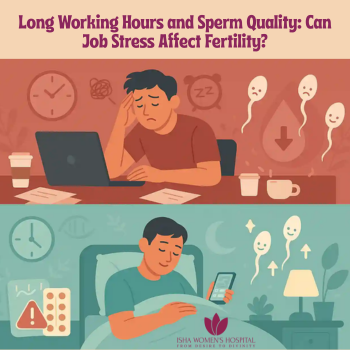
Long working hours and constant job stress can affect more than your mood and energy levels.
They may also influence the habits, sleep patterns, and overall health factors that play a role in sperm quality and male fertility.
But does working late, handling tight deadlines, or dealing with daily office pressure automatically damage your sperm?
No.
The relationship between stress and male fertility is complex, and research does not show that every man with a demanding job will develop fertility problems.
Understanding what may affect sperm health, which warning signs deserve attention, and when to consider a semen analysis can help you take practical steps without unnecessary worry.
Key Takeaways
- Long working hours and chronic job stress may affect male reproductive health indirectly, but they do not automatically cause infertility.
- Some studies have linked psychological stress with changes in semen quality, although findings vary.
- Poor sleep, smoking, heavy alcohol use, unhealthy eating, and inactivity may add to the effects of a demanding work schedule.
- Stress hormones interact with the body's reproductive systems, but cortisol levels alone cannot tell you whether your sperm quality is affected.
- Prolonged occupational heat or certain chemical exposures may be relevant to men working in specific environments.
- A semen analysis is the basic test used to assess sperm concentration, total count, movement, and shape.
- Better sleep, regular exercise, balanced nutrition, and appropriate stress management support overall health.
- If you are struggling to conceive, evaluating both partners is more useful than assuming work stress is the cause.
Can Long Working Hours Affect Male Fertility?
1. Can Long Working Hours Damage Sperm Quality?
Long working hours do not automatically damage sperm.
However, a demanding schedule can affect several aspects of daily life that matter for reproductive health.
Think about what happens when work regularly extends into the evening.
You may sleep less, skip meals, rely on takeaways, exercise less often, or use alcohol to unwind.
You may also feel too exhausted to spend quality time with your partner.
Over time, these patterns can affect general health, sexual wellbeing, and potentially some aspects of reproductive function.
In India, long commutes, late-night calls, rotating shifts, and pressure to meet deadlines can make healthy routines difficult to maintain.
That does not mean every busy professional has a fertility problem.
It means that your work schedule and the habits surrounding it are worth reviewing if you have concerns about conception.
The important distinction is that a demanding job is not a fertility diagnosis.
Why Busy Professionals May Overlook Fertility
Men often postpone health checks when work becomes their main priority.
Fatigue may be blamed on deadlines, low energy on poor sleep, and reduced interest in sex on being busy.
These explanations may be correct, but persistent symptoms can sometimes have other causes.
Male fertility problems also frequently occur without obvious symptoms.
A man can have normal sexual function and still have abnormal semen parameters.
Likewise, a man who experiences considerable stress may have normal sperm count and movement.
Key takeaway: Long working hours may contribute to fertility-related concerns through sleep, lifestyle, and health factors, but testing—not your job title or workload—is needed to assess sperm quality.
2. Does Job Stress Reduce Sperm Count?
Researchers have investigated whether psychological stress is associated with changes in semen quality.
Some studies have reported associations between stress and lower sperm concentration, reduced sperm motility, or changes in other semen parameters.
However, results are not consistent across all studies.
Stress is also difficult to separate from other factors.
For example, someone experiencing prolonged work pressure may also smoke, sleep poorly, exercise infrequently, or have an underlying health condition.
These factors can complicate the relationship between stress and fertility.
Therefore, it would be inaccurate to say that job stress directly causes low sperm count in every man.
Can You Have High Stress and Normal Sperm Count?
Yes.
A stressful period at work does not automatically mean that sperm production has been affected.
Similarly, men with relatively calm lifestyles can experience fertility problems because of hormonal conditions, varicocele, previous infections, genetic factors, or other medical causes.
If you are concerned about sperm count, a semen analysis provides much more useful information than trying to estimate your fertility based on how stressed you feel.
The test assesses several characteristics of semen and sperm, which a clinician interprets alongside your medical history.
Key takeaway: Stress may be one part of the fertility picture, but it cannot confirm or rule out a low sperm count.
How Chronic Stress May Affect Sperm
3. Cortisol, Stress Hormones, and Sperm Production
Cortisol is a hormone involved in the body's response to stress.
It helps regulate several functions, including energy use and the response to challenging situations.
Short-term increases in cortisol are a normal part of human physiology.
The concern is not that every stressful meeting causes harm.
Instead, prolonged stress can affect sleep, appetite, mood, blood pressure, and metabolic health.
The brain also communicates with the reproductive system through a network of hormones that helps regulate testosterone production and sperm development.
Severe or prolonged disturbances in this system may affect reproductive function in some circumstances.
However, the relationship is complex.
Feeling stressed does not prove that your cortisol is abnormally high or that your sperm production has decreased.
Can Stress Lower Testosterone?
Testosterone is important for male reproductive function, but its levels naturally vary.
They can be affected by sleep, time of day, illness, body composition, certain medications, and hormonal conditions.
Stress may contribute to changes in general health and sexual wellbeing, but stress alone cannot establish that someone has low testosterone.
If you experience persistent symptoms such as reduced sexual desire, erectile difficulties, or unexplained fatigue, a medical assessment may help identify the cause.
A doctor may recommend testosterone testing when clinically appropriate and interpret the result in context.
Key takeaway: Do not assume that stress has lowered your testosterone. Persistent symptoms deserve an assessment rather than guesswork.
4. Can Work Stress Affect Sperm Motility and DNA Quality?
Sperm motility refers to how sperm move.
Movement matters because sperm need to travel through the female reproductive tract to reach an egg.
A semen analysis assesses sperm movement alongside other parameters.
Some research has investigated whether psychological stress is associated with reduced motility or changes in other semen characteristics.
However, the available findings do not establish that work pressure directly reduces sperm movement in every man.
Other factors, including illness, smoking, heat exposure, and certain medical conditions, may also be relevant.
What Is Sperm DNA Fragmentation?
Sperm carry genetic material needed to form an embryo.
Sperm DNA fragmentation refers to breaks or damage in that genetic material.
Researchers are investigating how oxidative stress, certain illnesses, environmental exposures, and other factors may contribute to sperm DNA damage.
Oxidative stress occurs when there is an imbalance between harmful reactive molecules and the body's antioxidant defences.
Although stress and oxidative stress are related research topics, they are not interchangeable terms.
It is not accurate to conclude that a demanding job has damaged a man's sperm DNA simply because he feels exhausted or anxious.
Advanced sperm DNA fragmentation testing is also not routinely necessary for every man who experiences work stress.
A fertility specialist can advise whether it may be useful in a particular clinical situation.
Key takeaway: Sperm quality includes more than sperm count, but advanced testing should be guided by medical circumstances rather than fear.
Long Hours, Poor Sleep, and Fertility
5. Does Sleeping Too Little Affect Sperm Quality?
Sleep supports hormonal regulation, metabolic health, mood, and the body's recovery processes.
When work regularly cuts into sleep, several aspects of health can suffer.
Late-night deadlines, overnight travel, early meetings, and constant notifications can make it difficult to maintain a consistent routine.
Research has investigated associations between sleep problems and semen quality, but the findings are mixed.
Poor sleep does not automatically mean infertility.
Still, improving sleep is a sensible step for overall health, especially if you are trying to conceive.
Signs Your Work Schedule May Be Affecting Your Sleep
Pay attention if you:
- Regularly sleep too little.
- Feel exhausted throughout the day.
- Depend heavily on caffeine to remain alert.
- Frequently work overnight.
- Struggle to maintain a consistent sleep schedule.
- Experience persistent difficulty falling asleep or staying asleep.
These symptoms may reflect an unhealthy work routine, but they can also have other causes
Persistent insomnia or suspected sleep disorders deserve medical attention.
What Can You Do?
Start with realistic changes.
- Aim for a consistent sleep and wake time.
- Reduce late-night work where possible.
- Avoid caffeine close to bedtime if it interferes with sleep.
- Keep your bedroom dark, quiet, and comfortable.
- Seek advice if sleep problems continue despite reasonable changes.
Key takeaway: Better sleep supports overall health and may help create healthier conditions for reproductive function, although it cannot guarantee improved semen results.
6. Can Night Shifts Affect Male Fertility?
Your body follows a natural daily rhythm known as the circadian rhythm.
This rhythm helps regulate sleep, alertness, hormone patterns, and other biological processes.
Working overnight or rotating between day and night shifts can disrupt that rhythm.
The effects may include irregular sleep, changes in eating habits, fatigue, and metabolic problems.
Researchers are studying whether these changes are associated with male reproductive outcomes.
However, the evidence does not establish that every man who works nights will develop sperm problems.
Who May Need Extra Attention?
It may be particularly useful to review your health if you:
- Frequently alternate between day and night shifts.
- Have persistent sleep disruption.
- Experience significant fatigue.
- Have obesity, diabetes, or other metabolic conditions.
- Work in environments involving substantial heat or chemical exposure.
These factors do not prove that fertility has been affected.
They simply help identify areas that may deserve attention.
Key takeaway: Night shifts are a reason to pay attention to sleep and general health, not a reason to assume that your sperm have been damaged.
Workplace Habits That May Affect Sperm Health
7. Can Sitting All Day Affect Sperm Quality?
A desk job does not automatically cause infertility.
However, sitting for most of the day can make it harder to stay physically active.
When combined with unhealthy eating and insufficient exercise, a sedentary routine may contribute to weight gain and poorer metabolic health.
Obesity and certain metabolic conditions can affect reproductive hormones and may be associated with changes in semen parameters.
The solution is not necessarily to leave your desk job.
It is to create a routine that includes regular movement and supports your overall health.
What About Laptop Heat?
The testes normally function at a temperature slightly below core body temperature.
Prolonged or substantial heat exposure can be relevant to sperm production in certain circumstances.
However, evidence linking ordinary laptop use directly to infertility is limited and not definitive.
There is no need to panic about normal laptop use.
If your work involves prolonged exposure to high temperatures, industrial heat, or other occupational hazards, discuss suitable protective measures with your healthcare provider or workplace safety team.
Practical Changes
- Stand up and move regularly during the working day.
- Make time for consistent physical activity.
- Avoid prolonged occupational heat exposure where possible.
- Follow workplace safety guidance when working around heat or chemicals.
- Maintain a healthy weight through sustainable habits.
Key takeaway: Overall activity, metabolic health, and specific heat exposures matter more than simply having a desk job.
8. Can Work Pressure Lead to Unhealthy Habits That Affect Sperm?
A demanding schedule can make unhealthy coping habits easier to develop.
You might smoke during breaks, drink heavily to unwind, order fast food regularly, or rely on caffeine late into the evening.
These habits can gradually become part of your routine.
The issue is not that one unhealthy meal or a stressful week will automatically cause infertility.
It is the longer-term pattern that matters.
Why These Habits Matter
|
Habit or Exposure |
Why It Matters |
|---|---|
|
Tobacco use |
Associated with poorer reproductive health and adverse semen parameters |
|
Heavy alcohol use |
May affect hormones and reproductive function |
|
Obesity |
Can be associated with hormonal and metabolic changes |
|
Recreational drugs |
Some substances can impair reproductive function |
|
Anabolic steroids |
Can suppress the body's own testosterone production and sperm production |
|
Poor sleep |
Can affect general and metabolic health |
|
Inactivity |
May contribute to weight gain and metabolic problems |
External testosterone prescribed or used without appropriate medical supervision deserves particular attention.
Although testosterone may be used to treat certain medical conditions, taking external testosterone can suppress sperm production and reduce fertility.
Anabolic steroids can have similar effects.
Do not assume that testosterone products or bodybuilding supplements are harmless simply because they are marketed for fitness.
A More Useful Approach Than Blaming Stress
Rather than trying to change your entire life at once, identify one or two habits that have worsened since work became more demanding.
For example, you might begin by improving your sleep schedule and reducing tobacco or heavy alcohol use.
Small, consistent changes are generally more practical than extreme routines that are difficult to maintain.
Key takeaway: Sometimes the most useful fertility-related change is addressing the unhealthy habits that have developed around work pressure.
Can Stress Affect Sexual Performance and Conception?
9. Does Job Stress Cause Low Libido or Erectile Dysfunction?
Long working hours can leave you mentally exhausted.
When you are constantly thinking about deadlines, financial pressure, or workplace problems, sex may become less of a priority.
Stress, anxiety, poor sleep, and relationship strain can reduce sexual desire in some men.
However, low libido does not automatically mean that testosterone is low or that sperm production is abnormal.
If reduced sexual desire persists, a clinician can help investigate possible physical, psychological, medication-related, or hormonal causes.
Stress and Erectile Function
An erection depends on several systems working together, including the brain, nerves, blood vessels, hormones, and sexual stimulation.
Ongoing stress and performance anxiety can interfere with arousal or make it difficult to maintain an erection.
But erectile dysfunction can also be associated with diabetes, cardiovascular disease, certain medications, hormonal problems, and other health conditions.
Persistent erectile difficulties should not automatically be blamed on work pressure.
In some men, erectile dysfunction can be an early sign of an underlying health issue that deserves attention.
Key takeaway: Sexual function and sperm production are related aspects of reproductive health, but they are not the same thing. Each may need a different evaluation.
10. Can Job Stress Reduce Your Chances of Getting Pregnant?
Work pressure may affect conception indirectly.
For example, long commutes, business travel, late-night work, and exhaustion can make it difficult for couples to find time for intimacy.
Some couples also feel pressure to make every sexual encounter coincide perfectly with ovulation.
This can make trying to conceive feel like another deadline.
However, stress should not automatically be blamed when pregnancy does not occur.
Fertility depends on several factors, including egg health, ovulation, sperm health, the fallopian tubes, the uterus, and the age and medical history of both partners.
What Couples Can Do
- Discuss work schedules and fertility goals openly.
- Make time for intimacy without turning every encounter into a performance test.
- When trying naturally, consider regular intercourse during the fertile window.
- Seek medical advice if pregnancy is taking longer than expected.
- Avoid blaming either partner without understanding the underlying cause.
Key takeaway: Work stress may make conception more difficult indirectly, but difficulty getting pregnant deserves a proper assessment of both partners.
How to Check Whether Sperm Quality Is Affected
11. Should Men With High Job Stress Get a Semen Analysis?
You do not automatically need a semen analysis simply because you work long hours or feel stressed.
However, a semen analysis may be appropriate if:
- You and your partner are having difficulty conceiving.
- You have a history of testicular disease, injury, or surgery.
- You have used testosterone or anabolic steroids.
- You experience persistent reproductive or sexual symptoms.
- A previous semen analysis was abnormal.
- A clinician recommends testing based on your medical history.
A semen analysis is one of the main initial investigations used to assess male fertility.
What Does a Semen Analysis Measure?
|
Parameter |
What It Means |
|---|---|
|
Semen volume |
Amount of fluid ejaculated |
|
Sperm concentration |
Number of sperm per unit volume |
|
Total sperm count |
Total number of sperm in the sample |
|
Sperm motility |
How sperm move |
|
Sperm morphology |
Sperm shape and structure |
The results are interpreted together rather than relying on a single number.
A result outside the laboratory's reference range does not, by itself, prove that natural conception is impossible.
Semen parameters can also vary between samples.
Your clinician may recommend repeat testing if the first result is abnormal or does not fit the overall clinical picture.
Follow the laboratory's instructions about abstinence before providing a sample, as this can affect the interpretation of results.
Key takeaway: A semen analysis provides objective information about sperm parameters. It is more useful than trying to guess your fertility from stress levels, fatigue, or work hours.
12. When Should You See a Fertility Specialist?
A fertility assessment may be appropriate if:
- Pregnancy has not occurred after 12 months of regular unprotected intercourse.
- Your female partner is aged 35 or older and you have been trying for six months without pregnancy.
- Your partner is over 40, or either partner has a known fertility risk factor, making earlier evaluation appropriate.
- Your semen analysis is abnormal.
- You have persistent erectile or ejaculation problems.
- You have a history of testicular disease, reproductive surgery, chemotherapy, or testosterone or anabolic steroid use.
These are general guidelines, and individual circumstances may call for earlier assessment.
Why Both Partners Should Be Evaluated
Difficulty conceiving can result from male factors, female factors, or a combination of both.
Testing only one partner may delay diagnosis and lead to unnecessary investigations or treatment.
A couple-centred assessment helps clinicians understand the overall picture and discuss suitable next steps.
For men, this may include a medical history, examination when indicated, semen analysis, and selected hormone or other tests.
The tests recommended depend on the individual's symptoms and clinical findings.
Key takeaway: Do not assume that your job is the problem. If there are reasons to seek fertility care, timely assessment can help identify the actual cause.
Practical Ways to Support Sperm Health While Working Long Hours
13. How to Protect Sperm Health Without Quitting Your Job
You do not necessarily need to change careers to support your reproductive health.
Start with practical habits that fit your schedule.
Everyday Changes for Busy Professionals
Prioritise sleep.
Try to maintain a consistent sleep routine and allow enough time for rest.
Move regularly.
Make time for walking, exercise, or short movement breaks during the working day.
Eat balanced meals.
Include vegetables, fruit, whole grains, and suitable protein sources rather than relying on fast food for most meals.
Avoid tobacco and recreational drugs.
If you smoke or use tobacco, seek support to stop.
Limit heavy alcohol consumption.
Reducing alcohol can support general health, particularly when consumption has become frequent or excessive.
Manage chronic health conditions.
Diabetes, obesity, and certain hormonal conditions may affect reproductive health and should be managed with appropriate medical care.
Review occupational exposures.
Follow safety guidance if your work involves prolonged heat, chemicals, pesticides, or other reproductive hazards.
Avoid unprescribed testosterone and anabolic steroids.
These substances can suppress sperm production.
Be cautious with fertility supplements.
Not every product marketed for sperm health has strong evidence supporting its use.
Discuss supplements with a qualified clinician, particularly if you take other medicines or have existing health conditions.
Stress Management That Fits a Busy Schedule
Stress management does not have to involve an elaborate routine.
You could start with:
- Short walking breaks.
- Simple breathing or relaxation exercises.
- Realistic boundaries around after-hours work where possible.
- Time away from screens before bed.
- Open communication with your partner.
- Professional support if anxiety or burnout persists.
These steps cannot guarantee a particular sperm count or pregnancy outcome.
However, they can help support overall wellbeing and address habits that may be working against your health.
Key takeaway: Sustainable changes are more useful than extreme routines. Focus on the habits you can realistically maintain.
Long Working Hours and Sperm Quality
Long working hours and chronic job stress may affect the conditions that support male reproductive health.
Poor sleep, unhealthy coping habits, inactivity, metabolic problems, and certain occupational exposures may all be relevant.
But the evidence does not show that every stressed professional has poor sperm quality.
Nor can stress levels alone tell you whether your sperm count, motility, or morphology is normal.
If you are concerned about fertility, the practical next step is to review your health, discuss any relevant symptoms, and consider a semen analysis when appropriate.
At Isha Women’s Hospital & IVF Centre, Dombivli, men and couples can discuss fertility concerns and the need for further evaluation with a qualified clinician.
The aim is to understand the underlying issue rather than assume that work stress is responsible.
Your job may be demanding, but you do not have to guess about your reproductive health.