
Laparoscopic Myomectomy Before IVF: Does Fibroid Removal Improve IVF Success
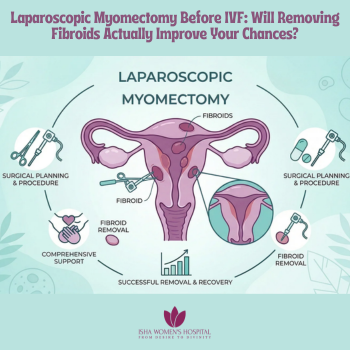
Hearing that you have uterine fibroids while planning IVF can raise many questions.
One of the first concerns many women ask during a consultation is:
Doctor, should I remove my fibroids before starting IVF?
The answer is not always straightforward.
Fibroids are extremely common among women of reproductive age, and many women with fibroids conceive naturally or through IVF without needing surgery. At the same time, certain fibroids—particularly those that alter the shape of the uterine cavity—may reduce the chances of embryo implantation or increase the risk of pregnancy complications.
As fertility specialists, our goal is not to remove every fibroid. Instead, we carefully assess whether a particular fibroid is likely to interfere with implantation, embryo transfer, or a healthy pregnancy.
Advances in minimally invasive gynecologic surgery have made laparoscopic myomectomy an effective option for selected women who may benefit from fibroid removal while preserving the uterus and future fertility.
In this article, I'll explain which fibroids matter before IVF, when laparoscopic myomectomy may improve reproductive outcomes, and how we make individualized treatment decisions at Isha Women's Hospital & IVF Centre, Dombivli.
Key Takeaways
- Not all fibroids require removal before IVF.
- The location, size, and number of fibroids are more important than simply having fibroids.
- Fibroids that distort the uterine cavity are more likely to affect implantation and pregnancy outcomes.
- Laparoscopic myomectomy may improve fertility in carefully selected patients.
- Surgery before IVF should always be based on individualized evaluation rather than a one-size-fits-all approach.
- Modern minimally invasive surgery generally offers faster recovery and less postoperative discomfort than open surgery for suitable candidates.
Do Fibroids Always Need to Be Removed Before IVF?
Understanding Fibroids and Fertility
Fibroids, also known as uterine leiomyomas, are benign (non-cancerous) growths that develop from the muscular wall of the uterus. They are among the most common gynecological conditions seen in women during their reproductive years.
Finding a fibroid on an ultrasound often causes understandable anxiety, especially for couples preparing for IVF.
Fortunately, having fibroids does not automatically mean your fertility will be affected.
Many women with fibroids:
- Conceive naturally.
- Undergo successful IVF treatment.
- Have healthy pregnancies without requiring surgery.
The impact of fibroids depends largely on whether they interfere with the uterus's ability to support implantation and pregnancy.
Some fibroids remain completely asymptomatic and never affect fertility, while others may change the shape of the uterine cavity, interfere with embryo implantation, or contribute to pregnancy complications.
This is why fertility specialists focus on the characteristics of the fibroid rather than simply its presence.
Dr. Chinmay Pataki explains:
When evaluating fibroids before IVF, the important question is not 'Do you have fibroids?' but rather 'Are these fibroids likely to affect your chances of pregnancy?'
Why Every Fibroid Is Different
No two fibroids are exactly alike.
Their effect on fertility depends on several important factors, including:
- Location within the uterus.
- Size of the fibroid.
- Number of fibroids present.
- Whether the fibroid distorts the uterine cavity.
For example, a small fibroid growing on the outer surface of the uterus may have little or no impact on fertility.
In contrast, a fibroid growing inside the uterine cavity—even if relatively small—can significantly interfere with embryo implantation.
Large fibroids within the uterine wall may also affect fertility if they alter the shape of the endometrial cavity or make embryo transfer technically difficult.
Because each fibroid behaves differently, treatment decisions should never be based on ultrasound findings alone.
A detailed fertility evaluation, high-quality imaging, and discussion of the couple's reproductive goals help determine whether surgery is likely to provide meaningful benefit.
Dr. Chinmay Pataki says:
Individualized care is essential. Some women clearly benefit from fibroid removal before IVF, while others can safely proceed with treatment without surgery.
Which Fibroids Can Affect IVF Success?
Types of Fibroids and Their Impact
Fibroids are classified according to where they develop within the uterus, and this location often has a greater influence on fertility than size alone.
The main types include:
| Type of Fibroid | Possible Effect on Fertility |
|---|---|
| Submucosal Fibroids | Most likely to reduce implantation and pregnancy rates because they distort the uterine cavity. |
| Intramural Fibroids (distorting the cavity) | May reduce IVF success and implantation in selected patients. |
| Intramural Fibroids (not distorting the cavity) | The effect varies depending on size, location, and individual circumstances. |
| Subserosal Fibroids | Usually have little or no direct effect on fertility or IVF outcomes. |
Among these, submucosal fibroids are generally considered the most significant because they occupy space within the uterine cavity where the embryo needs to implant.
Large intramural fibroids that alter the shape of the uterine cavity may also reduce implantation potential or make embryo transfer more challenging.
In contrast, subserosal fibroids, which grow on the outer surface of the uterus, rarely interfere with conception and are not usually removed solely to improve fertility.
This is why careful imaging is essential before deciding on surgery.
Dr. Chinmay Pataki explains:
The location of a fibroid often tells us much more about its impact on fertility than its size alone. Understanding uterine anatomy helps us recommend the most appropriate treatment.
How Fibroids May Affect Implantation
For an embryo to implant successfully, the uterine cavity needs to provide a healthy and receptive environment.
Certain fibroids may interfere with this process in several ways.
Depending on their location, fibroids may:
- Distort the uterine cavity.
- Reduce blood flow to parts of the endometrium.
- Trigger localized inflammation.
- Affect normal uterine contractions.
- Make embryo transfer technically more difficult.
- Increase the risk of miscarriage in selected situations.
It is important to remember that not every fibroid causes these problems.
Many women with fibroids have excellent implantation rates and healthy pregnancies.
The goal of fertility evaluation is to identify those fibroids that are most likely to interfere with treatment so that unnecessary surgery can be avoided while appropriate intervention is offered when it is likely to improve outcomes.
What Is Laparoscopic Myomectomy?
Understanding the Procedure
When a fibroid is likely to interfere with fertility or IVF success, one of the treatment options your gynecologist may recommend is a laparoscopic myomectomy.
A laparoscopic myomectomy is a minimally invasive surgical procedure performed to remove uterine fibroids while preserving the uterus. Unlike a hysterectomy, which removes the uterus, a myomectomy is specifically designed for women who wish to maintain their fertility or keep the option of future pregnancy.
During the procedure, a few small incisions are made in the abdomen. A tiny camera called a laparoscope is inserted through one incision, allowing the surgeon to view the pelvic organs on a high-definition monitor. Specialized surgical instruments are introduced through the remaining small incisions to carefully remove the fibroids while preserving as much healthy uterine tissue as possible. Once the fibroids are removed, the uterine muscle is meticulously repaired to promote healing and support future pregnancies.
For appropriately selected patients, laparoscopic surgery offers several advantages over traditional open surgery.
| Benefits of Laparoscopic Myomectomy | Potential Advantages |
|---|---|
| Smaller incisions | Better cosmetic outcome with minimal scarring |
| Less postoperative pain | Greater comfort during recovery |
| Reduced blood loss | Lower likelihood of blood transfusion in many cases |
| Shorter hospital stay | Earlier discharge and faster return home |
| Faster recovery | Quicker return to normal daily activities |
Despite these benefits, laparoscopic surgery is not suitable for every woman. The number, size, location, and complexity of the fibroids determine whether a minimally invasive approach is feasible. In some situations, an open abdominal myomectomy may still be the safest and most effective option.
The primary objective of laparoscopic myomectomy is not simply to remove fibroids, but to restore the normal shape of the uterus while preserving its function for future pregnancy. Achieving this requires careful surgical planning and expertise, particularly in women preparing for IVF.
Dr. Chinmay Pataki explains:
Laparoscopic myomectomy is a fertility-preserving procedure. When surgery is indicated, our aim is to remove only those fibroids that are likely to interfere with implantation or pregnancy while maintaining the strength and integrity of the uterus for future conception.
Who May Benefit from Laparoscopic Myomectomy?
Not every woman with fibroids needs surgery before IVF. The decision to perform a laparoscopic myomectomy is based on whether the fibroids are likely to reduce the chances of implantation, complicate embryo transfer, or affect the progression of a healthy pregnancy.
Women who may benefit from laparoscopic myomectomy include those with:
- Submucosal fibroids or intramural fibroids that significantly distort the uterine cavity.
- Large intramural fibroids that are suspected to interfere with embryo implantation or make embryo transfer technically difficult.
- Recurrent IVF failure, where cavity-distorting fibroids are considered a possible contributing factor.
- Recurrent miscarriage associated with fibroids that alter the shape of the uterine cavity.
- Large symptomatic fibroids causing heavy menstrual bleeding, pelvic pain, pressure symptoms, or rapid enlargement.
- Fibroids that obstruct access to the uterine cavity during embryo transfer.
Before recommending surgery, fertility specialists perform a detailed evaluation using imaging studies such as transvaginal ultrasound, 3D ultrasound, MRI in selected cases, or hysteroscopy to accurately assess the fibroids and determine whether they are likely to impact fertility.
The decision is always individualized. For some women, proceeding directly to IVF may be the best option. For others, removing specific fibroids first may improve the uterine environment and potentially enhance the chances of a successful pregnancy.
Dr. Chinmay Pataki says:
Surgery should only be recommended when the expected benefits outweigh the risks. Our goal is to optimize the uterus for implantation while avoiding unnecessary procedures that may delay fertility treatment without improving outcomes.
Does Removing Fibroids Improve IVF Success?
What Research Suggests
One of the most important questions couples ask before IVF is:
If I remove my fibroids, will my chances of pregnancy improve?
The answer depends on which type of fibroid is present.
Scientific research has consistently shown that not all fibroids affect fertility in the same way. While some fibroids can interfere with implantation and pregnancy, others have little or no measurable impact on IVF success.
Current evidence suggests the following:
| Clinical Situation | Possible Effect of Surgery |
|---|---|
| Submucosal fibroids | Removal may improve implantation, clinical pregnancy, and live birth rates. |
| Intramural fibroids that distort the uterine cavity | Surgery may improve IVF outcomes in carefully selected patients. |
| Small intramural fibroids that do not distort the cavity | Surgery may not consistently improve pregnancy rates, and the decision should be individualized. |
| Subserosal fibroids | Usually not removed solely to improve fertility, as they rarely affect implantation. |
Submucosal fibroids are generally considered the most significant because they occupy space within the uterine cavity where the embryo is expected to implant. Numerous studies have shown that these fibroids are associated with lower implantation and pregnancy rates, making their removal beneficial in many women planning fertility treatment.
Intramural fibroids present a more complex situation. If they significantly distort the uterine cavity or are large enough to affect uterine anatomy, laparoscopic myomectomy may improve reproductive outcomes in selected patients. However, smaller intramural fibroids that do not alter the cavity often require careful discussion, as surgery may not always provide additional benefit and could unnecessarily delay IVF.
Subserosal fibroids, which grow on the outer surface of the uterus, rarely interfere with implantation or embryo transfer and are generally not removed solely to enhance fertility unless they are causing significant symptoms such as pain or heavy menstrual bleeding.
Every treatment decision should balance the potential benefits of surgery against the recovery time, surgical risks, and the woman's age and ovarian reserve.
Dr. Chinmay Pataki explains:
Our goal is to recommend surgery only when there is a reasonable expectation that correcting the uterine anatomy may improve reproductive outcomes. Evidence-based, individualized care is always more beneficial than routinely removing every fibroid before IVF.
When Surgery May Not Be Necessary
It is important to remember that finding a fibroid on an ultrasound does not automatically mean surgery is required.
Many women undergo successful IVF treatment without having their fibroids removed. In fact, unnecessary surgery may expose patients to avoidable risks, increase healthcare costs, and delay fertility treatment without improving the likelihood of pregnancy.
Doctors may recommend monitoring rather than surgery when:
- The fibroids are small.
- They do not distort the uterine cavity.
- They are subserosal and located on the outer surface of the uterus.
- They are not causing symptoms such as heavy bleeding, pelvic pain, or pressure.
- They are unlikely to interfere with embryo transfer or implantation.
- Imaging suggests they are unlikely to affect pregnancy outcomes.
The decision also depends on the woman's age, ovarian reserve, previous fertility treatments, and overall reproductive goals. For example, a younger woman with a cavity-distorting fibroid may benefit from surgery before IVF, whereas a woman with diminished ovarian reserve may be advised to proceed with fertility treatment first if surgery is unlikely to improve her chances.
This is why comprehensive fertility assessment and high-quality imaging are essential before making any treatment decision.
Dr. Chinmay Pataki says:
The best fertility care is not about performing more surgery—it's about performing the right surgery for the right patient. Individualized evaluation helps us determine whether removing a fibroid is likely to improve implantation and pregnancy, or whether proceeding directly with IVF is the better approach.
What Tests Help Decide If Surgery Is Needed?
Fertility Evaluation Before IVF
Deciding whether a fibroid should be removed before IVF requires much more than simply measuring its size. As fertility specialists, we aim to understand whether a fibroid is likely to affect implantation, embryo transfer, or the ability of the uterus to support a healthy pregnancy.
This is why a detailed fertility evaluation is essential before recommending laparoscopic myomectomy.
At Isha Women's Hospital & IVF Centre, Dombivli, every treatment plan begins with a thorough assessment of both the patient and the fibroid. Rather than following a one-size-fits-all approach, we use clinical history, imaging findings, fertility goals, and current evidence to determine whether surgery is likely to improve reproductive outcomes.
Several investigations may be recommended depending on the patient's individual situation.
| Investigation | Purpose |
|---|---|
| Transvaginal Ultrasound (TVS) | Evaluates the size, number, and location of fibroids and their relationship to the uterine cavity. |
| 3D Ultrasound | Provides a detailed assessment of the uterine cavity and helps identify whether fibroids distort the endometrium. |
| MRI (Selected Cases) | Offers precise mapping of large, multiple, or complex fibroids when surgical planning requires additional detail. |
| Hysteroscopy | Allows direct visualization of the uterine cavity and helps diagnose submucosal fibroids or other intrauterine abnormalities. |
| Comprehensive Fertility Assessment | Evaluates both partners to identify any additional factors that may influence fertility or IVF outcomes. |
Accurate imaging plays a vital role because treatment decisions depend on how a fibroid affects the uterus—not simply on its presence.
For example, two women may each have a 5 cm fibroid. If one fibroid significantly distorts the uterine cavity and the other grows outward without affecting the cavity, their management may be completely different.
Similarly, if additional fertility factors such as reduced ovarian reserve, male factor infertility, or tubal disease are identified, these findings are considered alongside the fibroid before planning treatment.
Dr. Chinmay Pataki explains:
High-quality imaging allows us to understand the exact relationship between the fibroid and the uterine cavity. This helps us determine whether surgery is likely to improve fertility or whether proceeding directly with IVF is the more appropriate option.
An individualized fertility evaluation ensures that recommendations are based on evidence rather than assumptions, allowing couples to make informed decisions about the next steps in their fertility journey.
Questions to Ask Before Choosing Surgery
If laparoscopic myomectomy is being considered before IVF, it is important for patients to have a clear discussion with their fertility specialist. Surgery should be recommended because it is expected to provide a meaningful benefit—not simply because a fibroid has been detected.
Some helpful questions to discuss during your consultation include:
- Is my fibroid affecting or distorting the uterine cavity?
- Based on my imaging, is this fibroid likely to reduce implantation or pregnancy rates?
- Is laparoscopic myomectomy the most appropriate surgical approach in my case?
- What are the potential benefits and limitations of surgery before IVF?
- Could delaying IVF for surgery affect my overall fertility, especially considering my age and ovarian reserve?
- How long should I wait after surgery before beginning IVF treatment?
- Are there alternatives to surgery in my specific situation?
- What are the possible surgical risks, including bleeding, infection, scar formation, or the need for future pregnancy precautions?
These discussions allow couples to understand both the advantages and potential limitations of treatment. Shared decision-making is an important part of fertility care, ensuring that every recommendation aligns with the patient's reproductive goals and the best available medical evidence.
Dr. Chinmay Pataki says:
Every woman deserves a personalized treatment plan. Before recommending surgery, we carefully weigh the potential improvement in fertility against the time required for recovery, the surgical risks, and the couple's overall reproductive circumstances. The best decision is always one that is individualized and evidence-based.
Recovery After Laparoscopic Myomectomy
How Long Does Recovery Take?
One of the most common concerns women have before undergoing a laparoscopic myomectomy is how quickly they can return to normal life—and more importantly, when they can safely begin IVF.
Compared with traditional open surgery, laparoscopic myomectomy is a minimally invasive procedure that generally allows for a faster recovery, smaller incisions, and less postoperative discomfort in appropriately selected patients. However, recovery is a gradual process, and the uterus needs adequate time to heal before attempting pregnancy or embryo transfer.
While every woman's recovery is unique, the following timeline provides a general idea of what to expect.
| Recovery Milestone | Typical Timeline* |
|---|---|
| Walking | Usually the same day or the next day after surgery |
| Return to light daily activities | Approximately 1–2 weeks |
| Resume most normal activities | Around 2–4 weeks, depending on recovery |
| Planning IVF treatment | Individualized based on uterine healing and medical advice |
Recovery timelines vary depending on the number, size, and location of the fibroids removed, the complexity of surgery, and the individual's overall health.
Although many women feel physically better within a few weeks, internal healing of the uterus takes longer than skin healing. This is particularly important because the uterine muscle must regain adequate strength before it is exposed to the demands of pregnancy.
Before proceeding with IVF, your fertility specialist may recommend follow-up imaging, such as a pelvic ultrasound, to assess healing and determine whether the uterus is ready for embryo transfer. The recommended waiting period varies depending on the extent of surgery and the depth of uterine repair.
Rather than following a fixed timeline for every patient, the decision is individualized to maximize both safety and the chances of a successful pregnancy.
Dr. Chinmay Pataki explains:
Successful fertility treatment isn't only about removing fibroids—it is also about allowing the uterus sufficient time to heal. We individualize the timing of IVF based on surgical findings, recovery, and imaging so that treatment begins when the uterus is best prepared for implantation.
Can You Still Have a Healthy Pregnancy After Myomectomy?
This is one of the most reassuring conversations I have with patients.
The answer is yes—many women go on to have healthy pregnancies after laparoscopic myomectomy.
The purpose of fertility-preserving myomectomy is to improve the uterine environment while maintaining the uterus for future conception. When surgery is carefully planned and performed for appropriate indications, many women successfully conceive naturally or with assisted reproductive techniques such as IVF.
Pregnancy management after myomectomy depends on several factors, including:
- The number of fibroids removed.
- The size and location of the fibroids.
- The depth of the uterine incision and repair.
- The overall health of the uterus following healing.
- Any additional fertility or obstetric considerations.
Once pregnancy is achieved, routine antenatal care continues as with any pregnancy. In some cases, depending on the extent of uterine surgery, your obstetrician may recommend additional monitoring or discuss the most appropriate mode of delivery based on your individual clinical situation.
Every pregnancy following myomectomy is unique, and delivery planning should always be guided by the treating obstetrician after reviewing the surgical details and ongoing pregnancy assessment.
Dr. Chinmay Pataki says:
The majority of women recover well after laparoscopic myomectomy and many achieve successful pregnancies. Careful surgical technique, appropriate healing time, and individualized pregnancy planning all contribute to achieving the best possible outcomes for both mother and baby.
By combining minimally invasive surgery with evidence-based fertility care, we aim not only to optimize IVF success but also to support a safe and healthy pregnancy in the months and years ahead.
Advanced Fibroid and Fertility Care at Isha Women's Hospital
Comprehensive Fibroid Assessment
Every woman diagnosed with fibroids has a unique reproductive history, different fertility goals, and individual concerns. For this reason, there is no universal recommendation for removing fibroids before IVF.
At Isha Women's Hospital & IVF Centre, Dombivli, we believe that successful fertility treatment begins with an accurate diagnosis. Before recommending surgery, we perform a comprehensive evaluation to determine whether a fibroid is truly affecting fertility or whether IVF can safely proceed without surgical intervention.
Our assessment focuses not only on identifying fibroids but also on understanding how they interact with the uterus and the couple's overall fertility profile.
A comprehensive evaluation may include:
- Advanced transvaginal pelvic ultrasound to assess the size, number, and location of fibroids.
- 3D ultrasound when additional assessment of the uterine cavity is required.
- Comprehensive fertility evaluation of both partners.
- Assessment of ovarian reserve, age, previous fertility treatments, and reproductive history.
- Evaluation of whether the fibroid may interfere with implantation, embryo transfer, or pregnancy.
- Individualized discussion regarding the potential benefits and limitations of surgery before IVF.
In selected patients, additional investigations such as MRI or diagnostic hysteroscopy may be recommended to better define the relationship between the fibroid and the uterine cavity, particularly when imaging findings are inconclusive or surgical planning is required.
Rather than treating every fibroid the same way, our goal is to identify the women who are most likely to benefit from intervention while avoiding unnecessary surgery in those unlikely to gain additional reproductive benefit.
Dr. Chinmay Pataki explains:
The decision to remove a fibroid should always be guided by evidence and individualized evaluation. Understanding the exact location of the fibroid and its effect on the uterine cavity allows us to recommend the most appropriate fertility treatment with confidence.
Minimally Invasive Gynecologic Surgery and IVF Planning
When surgery is considered beneficial, careful coordination between gynecologic surgery and fertility treatment becomes essential.
At Isha Women's Hospital & IVF Centre, our approach is designed to preserve reproductive potential while minimizing delays in the fertility journey. Every surgical recommendation is made after considering the patient's age, ovarian reserve, fertility history, and the likelihood that surgery will improve implantation or pregnancy outcomes.
Depending on the clinical findings, treatment options may include:
- Laparoscopic myomectomy for appropriately selected intramural or subserosal fibroids.
- Hysteroscopic myomectomy for submucosal fibroids that project into the uterine cavity.
- Fertility-preserving surgical techniques aimed at maintaining normal uterine anatomy.
- Individualized planning for the safest timing of embryo transfer or IVF after adequate uterine healing.
- Ongoing monitoring and reproductive counseling throughout treatment and pregnancy planning.
Equally important is knowing when surgery is not required. If imaging suggests that a fibroid is unlikely to affect implantation or pregnancy, proceeding directly with IVF may be the most appropriate course of action. This balanced, evidence-based approach helps avoid unnecessary procedures while ensuring that women who are likely to benefit from surgery receive timely care.
Throughout the fertility journey, our multidisciplinary team works closely with patients to explain every recommendation, answer questions, and develop a treatment plan that aligns with their reproductive goals and current scientific evidence.
Dr. Chinmay Pataki says:
The objective is not simply to perform surgery or start IVF as quickly as possible. It is to choose the right sequence of treatment for each patient. By combining advanced imaging, minimally invasive surgery when indicated, and individualized IVF planning, we aim to create the best possible environment for a healthy pregnancy.